Enterprise Sourcing
Technical & Commercial FAQ
Clear, unvarnished engineering answers regarding European compliance, floor slab load capacities, fire suppression standards, and international ocean logistics.
Have specific DWG architectural drawings? Our engineering desk provides calculation reviews aligned with EN 15512 within 24 hours.
1. What is the fundamental structural difference between rack-supported and structural column mezzanines?
+
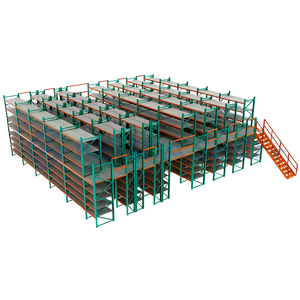
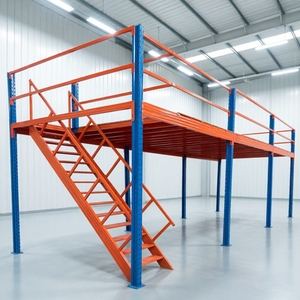
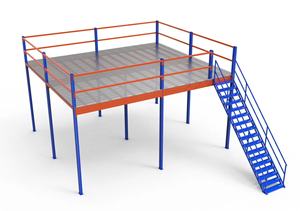
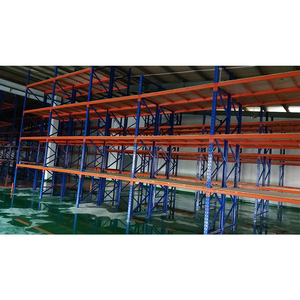
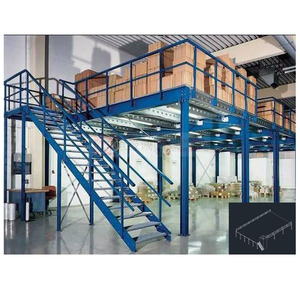
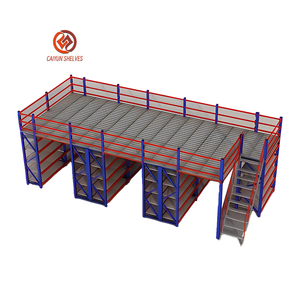
A standard structural column mezzanine relies on heavy hot-rolled wide-flange steel columns (such as HEA or H-beams) spaced on broad grids (e.g., 6×6m or 6×8m) to support an elevated open platform, requiring subsequent installation of freestanding shelving beneath it. In contrast, a pallet rack-supported mezzanine utilizes the vertical cold-formed uprights of the pallet racking system itself as the primary vertical load-bearing columns. This completely eliminates standalone structural columns, significantly reduces steel weight and overall material expenditure by 30% to 45%, and provides ready-to-use heavy pallet storage on the lower floor integrated directly with multi-tier picking aisles or flat storage decks overhead.
2. How are point loads calculated and transferred to the warehouse concrete floor slab?
+
Total downward loads are the sum of dead loads (the weight of racking steel, decking, handrails, stairs, and utilities) and live loads (pallet inventory, elevated floor live storage of 300 to 1000 kg/m², plus dynamic manual trolley wheel concentrations). Because rack-supported mezzanines distribute vertical forces across dozens of closely spaced upright frame footings (typically spaced 1.0m to 1.2m deep and 2.3m to 2.7m wide), the point load beneath each footplate is substantially lower and far more evenly distributed than the concentrated 50kN to 100kN loads exerted by heavy wide-span structural mezzanine posts. HEDA Shelves engineers size enlarged baseplates (e.g., 180×180×8mm or 200×200×10mm) anchored with Hilti/Fischer certified wedge anchors to ensure slab punch-through shear stress remains well within standard 150mm to 200mm industrial concrete slab compressive design thresholds (C25/30 rating).
3. What fire suppression codes and sprinkler configurations apply to multi-tier mezzanines?
+
International building and fire codes—notably NFPA 13 in North America and EN 12845 across Europe—dictate fire suppression requirements based on mezzanine area, ceiling clearance, and floor deck permeability. When an elevated mezzanine deck exceeds 4.5 meters in width or covers substantial floor area, ceiling-mounted sprinklers are blocked by solid flooring. To resolve this, HEDA Shelves supplies specialized galvanized open-steel plank flooring engineered with 50% open area perforations. This allows sprinkler water discharge from overhead systems to freely penetrate to lower pallet levels while maintaining smooth wheel rollability. For large-scale installations, we integrate dedicated in-rack sprinkler pipe support brackets within the racking framework to supply ESFR (Early Suppression Fast Response) heads under every deck level.
4. Can rack-supported mezzanines accommodate Autonomous Mobile Robots (AMRs)?
+
Yes. Integrating AMRs or AGVs on upper mezzanine decks requires specific dynamic load engineering and tighter floor deflection limits. While standard human-picking mezzanines are engineered to an L/250 deflection criteria under uniform live loads, AMR-supported decks are stiffened to L/400 or L/500 to prevent rolling deck undulation that could disrupt robot LiDAR sensors or camera navigation. Furthermore, the flooring substrate is upgraded from standard steel planks to heavy-duty corrugated B-decking topped with high-density anti-static resin board or fiber-reinforced cement composite panels, ensuring an ultra-smooth, high-traction, and wear-resistant operating surface for high-frequency robotic wheels.
5. Which engineering certifications and structural documentation are provided for European permits?
+
HEDA Shelves supplies comprehensive compliance packages required by municipal building inspectors, insurance auditors, and QHSE officers across Europe. Our systems are certified under CE Certificate No. 2435-CPR-8605159 (Construction Products Regulation) and manufactured under ISO 9001:2015 Quality Management standards. With every project, our engineering office provides stamped structural calculation reports referencing EN 15512:2020 (Steel static storage systems – Adjustable pallet racking systems – Principles for structural design), EN 15620 (Tolerances and clearances), and EN 1090-1 / EN 1090-2 execution classes, accompanied by clear assembly blueprints and statutory EN 15635 load warning notices for each bay.
6. What is the typical lead time from design approval to container arrival at European or North American ports?
+
From the receipt of approved CAD layouts, fabrication at our Guangzhou manufacturing facility typically takes 15 to 25 calendar days depending on total tonnage. Ocean transit time from the Port of Nansha/Shenzhen to major European gateway ports (such as Rotterdam, Hamburg, Antwerp, or Felixstowe) is approximately 28 to 35 days. Shipments to North American West Coast ports (Los Angeles, Long Beach) take approximately 16 to 22 days, while East Coast destinations (Newark, Savannah) average 28 to 34 days. We provide complete Incoterms coverage (FOB, CIF, CFR, or door-to-door DDP including customs brokerage and inland container drayage).
7. How does seismic zoning influence the engineering of pallet rack supported mezzanines?
+
In seismic zones (such as Southern Europe, parts of the US West Coast, or Australasia), the elevated mass of inventory on upper mezzanine floors drastically increases lateral shear and overturning moments during ground acceleration. Structural design under Eurocode 8 or FEMA/ASCE 7 guidelines requires rigorous modal response spectrum analysis. We adjust the structural configuration by specifying thicker steel gauges (3.0mm to 3.5mm uprights), upgrading steel grade from Q235B to Q355B (high yield strength), adding heavy vertical X-bracing in spine and side corridors, and employing heavy ductile baseplates with dual post-installed seismic anchors to safely absorb and dissipate lateral ground energy.
8. What flooring substrate provides the optimal balance of durability, acoustic performance, and ergonomics?
+
The selection depends on the primary material handling method:
• Galvanized Perforated Steel Planks: Unsurpassed for fire sprinkler permeability, industrial durability, and zero maintenance; ideal for manual picking with light hand carts.
• Interlocking Solid Steel Deck with Anti-Slip Embossing: Optimal for oily environments, small hardware parts, or where complete light blockage to lower tiers is required.
• Corrugated Steel B-Deck with High-Density 38mm Tongue-and-Groove Mezzanine Board: The premier choice for high-frequency e-commerce pick lofts. It provides exceptional acoustic absorption, suppresses hollow footstep noise, and offers an ultra-smooth rolling surface for pallet trucks, hand trolleys, and autonomous mobile robots.
9. How does HEDA Shelves manage export packaging to prevent corrosion and distortion during sea transport?
+
Export shipping across humid equatorial waters exposes steel components to severe salinity and condensation (container rain). HEDA Shelves applies an industrial 4-stage packaging protocol: First, all powder-coated uprights and beams are wrapped with scratch-resistant expanded polyethylene (EPE) pearl cotton. Second, bundles are strapped with high-tensile PET plastic steel strapping over heavy-gauge corner protector channels. Third, floor planks and accessories are crated on fumigated wooden pallets or custom steel shipping cradles wrapped in VCI (Vapor Corrosion Inhibitor) waterproof shrink film. Finally, containers are loaded with heavy-duty desiccants and lumber blocking to eliminate cargo shifting in high seas.
10. Can an existing standard pallet racking system be retrofitted into a rack-supported mezzanine?
+
Retrofitting is occasionally possible, but generally not recommended without rigorous structural recertification. Standard selective pallet racking is engineered to resist axial compression and localized beam shear based strictly on designated pallet heights. Introducing an elevated mezzanine deck adds substantial dynamic live loads, horizontal aisle braking forces, and floor beam point loads for which standard upright profiles, footplates, and slab anchor bolts were never originally calculated. In 90% of warehouse modernization projects, it is far safer, faster, and more cost-effective to engineer a dedicated rack-supported mezzanine from the ground up, ensuring every column profile, joint connection, and footplate is certified to handle multi-tier structural demands safely.