Global Manufacturing Benchmark • ISO 9001:2015 • CE Certified

Top Trusted Teardrop Pallet Rack System Factories & Suppliers

An authoritative engineering and procurement white paper evaluating cold-rolled steel integrity, universal teardrop beam connectivity, RMI / EN design compliance, and smart supply chain trends for modern high-throughput distribution hubs.

Direct-From-Factory Solutions

High-Performance Pallet Racks & Industrial Storage Units

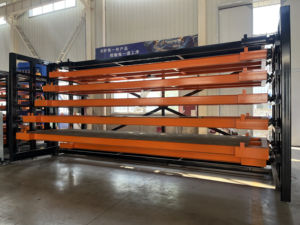
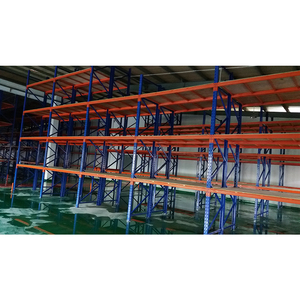
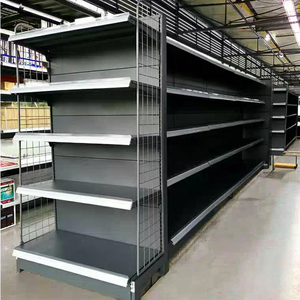
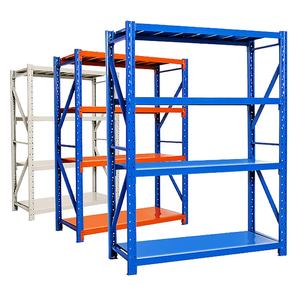
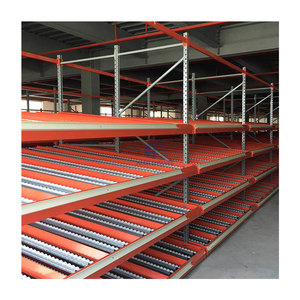
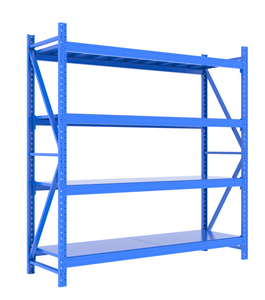
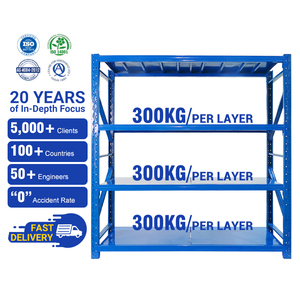
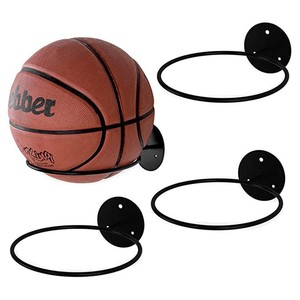
Engineered with precision punch geometries, electrostatic powder coating, and heavy-gauge structural carbon steel. Explore our verified factory-direct product lines engineered for heavy storage, e-commerce retail distribution, dynamic gravity lanes, and versatile parts organization.

Structural Metallurgy & Standards

Engineering Teardrop Pallet Rack Systems: The Technical Baseline

A rigorous examination of teardrop connection physics, cold-formed structural steel yield strengths, load-deflection ratios, and global standard harmonization across RMI MH16.1, EN 15512, and ISO 9001:2015.

The industrial teardrop pallet rack profile is universally recognized as the standard configuration for North American, European, and trans-global distribution centers. Originating as a self-securing geometric keyhole pattern, the design relies on an inverted conical punch with a 2-inch vertical adjustment pitch. The engineering superiority of this system stems from its mechanical interlocking mechanism: downward gravitational force exerted by pallet loads actively pulls the beam pin into the narrowing base of the teardrop punch. This creates a wedging effect that significantly resists rotational deflection, dynamic live-load vibration, and seismic shear forces.

However, beneath outward geometric compatibility lies immense variation in structural metallurgy, roll-forming precision, connection rigidity, and cyclic fatigue endurance. Top-tier manufacturing operations such as Guangzhou Heda Shelves Co., Ltd. distinguish industrial-grade teardrop frames through rigorous quality management, automated multi-stage roll-forming lines, and compliance with the stringent engineering parameters defined by the Rack Manufacturers Institute (RMI MH16.1) and European Standards (EN 15512 and EN 15620).

Critical Metallurgy & Profile Mechanics: Q235B / Q355B vs. ASTM A1011

In high-bay racking systems spanning elevations from 6 meters up to 18 meters, raw material yield strength governs overall structural safety. Low-cost manufacturers frequently utilize commercial-grade, non-certified mild steel with unpredictable carbon content and inconsistent tensile thresholds. Under sustained load cycles, this results in column buckling, micro-fissuring around punch perimeters, and catastrophic weld shearing under seismic shock or accidental forklift impact.

By contrast, certified manufacturers construct upright columns and load beams from certified structural hot-rolled and cold-rolled strip steels:

  • Structural Grade Q235B / ASTM A36 Equivalent: Boasts a minimum yield strength of 235 MPa and ultimate tensile strength exceeding 370–500 MPa, delivering optimal balance between cold ductility during roll-forming and dynamic impact toughness.
  • High-Strength Micro-Alloyed Q355B / ASTM A1011 Grade 50: Delivering a yield strength of 355 MPa, this alloy is standard for high-density heavy-load drive-in uprights, high-bay automated warehouse structures, and cold-storage environments operating below -30°C where low-temperature notch toughness is critical.
  • Continuous High-Precision Roll-Forming: Rather than press-braking discrete segments, upright columns undergo progressive cold-forming through 18–24 sequential precision roll passes. This prevents localized residual stresses, maintains microstructural integrity along profile corner bends, and guarantees vertical straightness within a strict tolerance of ≤ 1/1000 over total upright length.
Specification Parameter Commercial Grade (Low-Tier) HEDA Shelves Industrial Standard International Standard Baseline
Steel Alloy Specification Recycled / Uncertified Commercial Steel Certified Prime Q235B / Q355B (SS Grade 50) ASTM A1011 / EN 10025-2 Certified
Column Punching Precision Mechanical single-stroke (±1.5mm variance) Automated CNC Progressive Die (±0.1mm) RMI MH16.1 Universal Tolerances
Deflection Limit (L/D Ratio) L / 120 (Visible sagging, weld fatigue) L / 200 maximum under maximum static load EN 15512 / RMI MH16.1 (L/180 min)
Surface Pre-Treatment Line Manual solvent wipe or bare degreasing Multi-stage automatic pickling & phosphating ISO 9001:2015 & RoHS Compliance
Powder Coating Thickness 40–50 μm (Prone to chipping and rapid oxidation) 70–90 μm Electrostatic TGIC Polyester ASTM D3359 Cross-Hatch Adhesion (Class 5B)
Safety Pin Mechanism Friction clip or manual bent nail Auto-engaging spring-steel positive lock pin OSHA / ANSI MH16.1 Positive Locking
Factory-Direct Advantage

Guangzhou Heda Shelves: 25 Years of Engineering Authority

From an initial fabrication facility founded in 2001 to a global racking provider, HEDA Shelves integrates architectural CAD layout planning, robotic laser and cold-roll production, and turnkey sea-freight logistics for warehouse operators worldwide.

2001
Year Established • 25+ Yrs Industry Track Record
30,000m²
Modern Smart Manufacturing Facility
30,000t
Monthly Cold-Formed Steel Capacity
10,000+
Turnkey Distribution Centers Executed in 120+ Countries

10-Step In-House Manufacturing & Quality Control Protocol

01

Raw Steel QC

Mill test certificates, ultrasonic flaw inspection & spectral chemical analysis.

02

Laser Cutting

High-speed CNC fiber cutting for structural connectors and baseline plates.

03

CNC Punching

Automated precision multi-station tool for accurate 2-inch teardrop profiles.

04

Roll Forming

Progressive 24-station cold-bending rollers forming seamless upright geometries.

05

Robotic Welding

Pulse MIG welding of multi-prong beam connectors to prevent shear defects.

06

Surface Polishing

Deburring and mechanical shot-blasting to eliminate scale and mill oxide.

07

Chemical Pre-Treat

Immersion degreasing, acid pickling and nano-ceramic zirconium phosphate passivation.

08

Powder Coating

Electrostatic spray booth with curing ovens running at 200°C for high resilience.

09

Load Testing

Destructive and non-destructive hydrostatic load cell verification per batch.

10

Export Pack

Seaworthy protective strapping, edge protectors, and barcode-labeled bundles.

Free 3D Layout & FEA Structural Design

HEDA Shelves eliminates procurement risk by providing free preliminary architectural CAD layouts, aisle turning radius calculations for reach trucks, and finite element analysis (FEA) models to evaluate stress points and deflection under full rated capacities.

Compliant with ANSI/RMI MH16.1 & Eurocode 3 standards.

Full OEM / ODM Customization Capacity

From custom beam lengths configured around non-standard GMA, Euro, or Australian pallets, to corporate branding colors (RAL color matches), galvanized finishes for harsh chemical storage, and integrated sprinkler-pipe clearances, our factory delivers exact project specifications.

Direct factory pricing with private-label support for distributors.

Accredited Testing & Certified Traceability

Guangzhou Heda Shelves Co., Ltd. holds verified CE Certification (No. 2435-CPR-8605159) and ISO 9001:2015 accreditation (Certificate No. 18624Q00169R0M). Every project includes steel mill metallurgical test reports, ultrasonic weld certificates, and certified load notices.

Guaranteed acceptance by local municipal code enforcement.
Market Dynamics & Forecasting

Procurement Analysis: Strategic Trends in Industrial Racking

How supply chain volatility, nearshoring strategies, ESG regulations, and autonomous robotics are reshaping teardrop pallet rack procurement budgets.

1. Nearshoring, Regional Buffers & Steel Index Volatility

Global supply chain disruptions have driven industrial logistics managers away from extreme 'Just-in-Time' inventory toward resilient 'Just-in-Case' buffer architectures. In response, modern fulfillment operations are commissioning 30% to 50% larger floor footprints and prioritizing standardized teardrop rack systems due to their universal interchangeability.

Because raw steel comprises 60%–75% of teardrop rack manufacturing costs, enterprise procurement directors must hedge against Hot Rolled Coil (HRC) index price swings. Direct partnerships with scalable manufacturers like Heda (processing 30,000 tonnes monthly) ensure bulk raw-material purchasing power, locking in competitive per-bay pricing and mitigating mid-project cost escalations.

Long-term volume contracts with fixed delivery schedules mitigate raw material risk.

2. Automation Interface: AMR, AGV & Aisle Tolerances

The acceleration of warehouse robotics—ranging from Autonomous Mobile Robots (AMRs) to Automated Guided Vehicles (AGVs) and high-density Radio Shuttle carts—is transforming structural racking specifications. While manual forklifts tolerate minor bay variances, autonomous pickers require absolute structural rigidity and strict clearance tolerances.

Future-ready teardrop installations require tighter plumbness tolerances (≤ 1/1000 according to EN 15620 Class 300/400 standards), precision bottom-beam floor clearances for robot chassis transit, and integrated reflective optical alignment targets. Furthermore, rack footplates must be reinforced to resist the dynamic point loads generated by high-cycle robotic traffic.

Robotic integration requires high-precision laser-aligned base configurations.

IoT Structural Health Telemetry

Modern mega-hubs are pioneering load-cell sensors and piezoelectric impact monitors embedded directly into teardrop upright bases. These IoT nodes record subtle structural vibrations, unapproved overload conditions, and accidental forklift collisions in real time, notifying facility safety managers via automated cloud alerts before micro-fractures compromise overall aisle stability.

Digital Twin & BIM Integration

Enterprise logistics procurement mandates the submission of full Building Information Modeling (BIM) files prior to purchase. Structural racking models are digitized into Autodesk Revit and IFC formats, allowing logistics planners to simulate sprinkler clearance vectors, airflow currents in temperature-controlled spaces, and forklift operational lines.

Decarbonization & Eco-Finishes

Under new European and North American Scope 3 emissions regulations, procurement executives demand eco-conscious manufacturing. HEDA Shelves leads this shift through closed-loop water treatment lines during chemical pre-treatment, heavy-metal-free zirconium conversion coatings, and low-VOC thermo-cured powder systems that lower lifecycle environmental impact.

Buyer Knowledge Base

Frequently Asked Technical & Procurement Questions

Essential guidance for warehouse executives, procurement officers, and structural engineers specifying industrial teardrop pallet racking systems.

What makes the teardrop pallet rack profile superior to slotted, hex, or structural bolt-together systems?
The teardrop profile is the predominant industry standard because it delivers an optimal balance between structural rigidity, rapid installation speed, and universal interchangeability. Unlike bolted racks that require specialized torque tools and extensive assembly labor, teardrop beams snap directly into conical upright slots and are secured by automatic safety pins. The tapered geometry converts vertical gravitational pallet weight into horizontal interlocking clamping force. While structural bolted systems are selected for severe outdoor conditions, teardrop designs remain the most cost-effective, versatile, and easily reconfigured choice for indoor warehousing.
Are teardrop uprights and step beams manufactured in Asia compatible with existing North American systems?
Yes, provided the manufacturer strictly adheres to the universal 2-inch center-to-center teardrop pitch and step-beam connector standard. Guangzhou Heda Shelves manufactures components using high-precision progressive CNC dies that mirror North American specifications. This allows our upright frames, cross beams, wire decking, and pallet supports to integrate seamlessly into legacy installations supplied by major domestic manufacturers, eliminating concerns regarding vendor lock-in.
How is the maximum permissible load capacity calculated per beam level?
Beam capacity is determined by yield strength, profile gauge, beam depth, and span length, governed by RMI MH16.1 and EN 15512 standards. Under uniformly distributed load (UDL) conditions, the allowable maximum deflection must not exceed L/180 (or L/200 under stringent corporate parameters), where L equals the clear span between uprights. For instance, a standard 96-inch (2438 mm) beam rated for 5,000 lbs (2268 kg) per pair must exhibit no more than 0.53 inches (13.5 mm) of vertical deflection under full load, returning to zero permanent deformation upon load removal.
What specific certifications and compliance documentation must be provided for municipal building permits?
Local building departments typically require a certified structural calculation package stamped by a licensed Professional Engineer (PE). Key documents include: (1) Steel Mill Metallurgical Certificates confirming Q235B/Q355B or ASTM yield strength, (2) CE Factory Production Control Certification (e.g., CE No. 2435-CPR-8605159), (3) ISO 9001:2015 Quality Management accreditation, (4) Certified Anchor Bolt Pull-Out Calculations accounting for local seismic site classifications (Ss and S1 values per IBC / ASCE 7), and (5) ANSI/RMI MH16.1 Load Application and Rack Safety plaques.
What surface treatment is recommended for cold storage facilities and high-humidity ambient environments?
For standard ambient distribution centers, an automated multi-stage pre-treatment (degreasing, iron or zirconium phosphating) followed by an electrostatic powder coating (70–90 μm) is optimal. However, in cold storage facilities operating below -20°C where condensation cycles occur, or in coastal regions with salt-laden atmospheres, Hot-Dip Galvanizing (HDG) per ASTM A123 is strongly recommended. HDG provides complete zinc immersion with a minimum thickness of 75–85 μm, delivering superior sacrificial anode protection against oxidation.
What standard production lead times and shipping packaging practices apply to export orders?
Standard production runs for full container load (FCL) orders typically range between 20 to 35 calendar days from finalized CAD layout sign-off. Given the heavy weight and length of upright columns (often 6 to 12 meters), components are bundled on specialized steel dunnage with protective corrugated corner guards, heavy-gauge PET plastic strapping, and water-resistant stretch wrap. Beams are stacked connector-to-connector to prevent flange deformation during sea transit.
How can logistics buyers differentiate tier-1 factory manufacturers from intermediate trading agents?
Direct manufacturers maintain physical production facilities featuring automated roll-forming lines, automated powder-coating lines, and robotic welding stations rather than simple commercial offices. They provide genuine Mill Test Certificates tied directly to raw coil batches, publish verifiable ISO 9001:2015 and CE registration numbers, provide live video tours of production runs, and offer in-house structural engineering teams capable of modifying tooling and producing customized calculations.
Request an Engineered Layout & Complete Technical Catalog

Collaborate directly with Guangzhou Heda Shelves Co., Ltd.'s senior application engineers. Provide your facility floor plans (DWG/PDF), clear ceiling heights, pallet load dimensions, and forklift specifications to receive an engineered CAD layout, load tables, and factory-direct pricing within 24 hours.