High-Density & Heavy Duty Warehouse Racking Lineup
Engineered to withstand stringent seismic, load-distribution, and occupational safety mandates across Victorian logistics hubs.
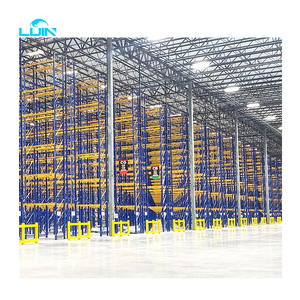
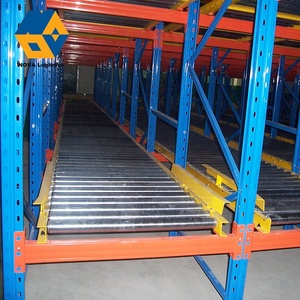
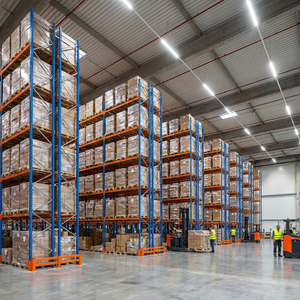
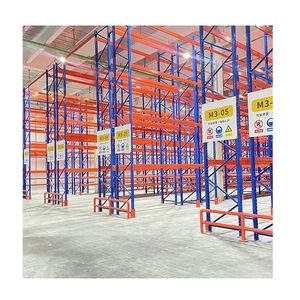
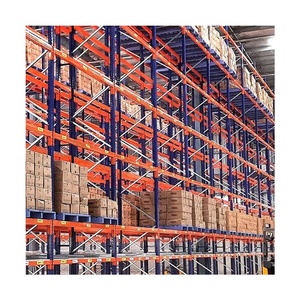
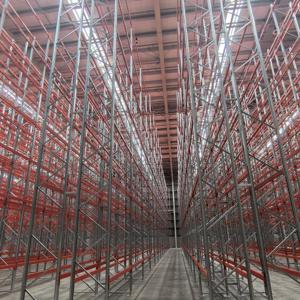
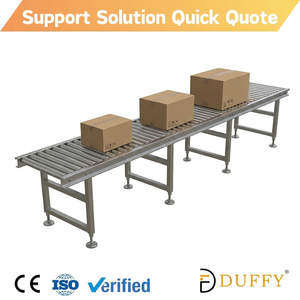
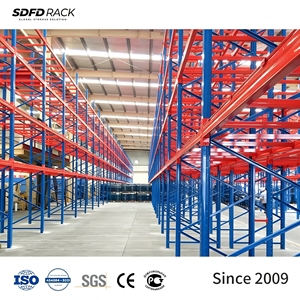
Movable & High-Density Racking Dynamics in Modern Australian Distribution
Decoupling Floor Footprint Constraints from Volumetric Pallet Capacity in High-Yield Industrial Zones
In high-velocity supply chain markets such as Melbourne, industrial warehousing is confronted with a structural inflection point. Compounding land acquisition costs, escalations in industrial lease rates across key Victorian submarkets, and stringent occupational health mandates have made conventional static racking configurations mathematically and economically inefficient for high-density storage operations. Movable warehouse racking systems—also classified in heavy industrial nomenclature as mobile pallet racking, motorized mobile carriage racking, or track-guided dynamic racking—deliver a radical technological response: transforming static forklift access aisles into dynamic, programmable clearways that operate on demand.
Conventional selective pallet racking dedicates as much as 60% to 65% of total warehouse floor surface area strictly to vehicular access corridors. While this layout provides unencumbered, 100% immediate selectivity for every single pallet location, it yields a volumetric land utilisation efficiency that is increasingly unviable within Melbourne's urban core and Western logistics zones. By mounting heavy-duty structural upright frames onto motorized, electromechanically synchronised steel wheel bases moving across sub-floor embedded flush guide tracks, a single operational aisle can service blocks of eight to fifteen dual-entry racking runs. This structural architecture consolidates floor space consumption by up to 85% or, conversely, increases net storage capacity within an existing warehouse envelope by 100% to 180% without requiring structural building expansion.
Electro-Mechanical Bogie Carriage Drive
Movable racking utilizes decentralised variable frequency drives (VFD) coupled directly to solid forged steel wheels. This prevents mechanical shock loading, guarantees synchronised multi-bay movement, and eliminates racking mast sway during acceleration or deceleration cycles.
Soft Start / Stop AutomationMulti-Tier Safety & Optical Light Curtains
Compliant with WorkSafe Victoria and Australian Standard AS 4084, our movable racking carriages feature continuous photoelectric safety curtains at floor and carriage heights, emergency stop trip bars, and proximity collision-detection sensors along every mobile axis.
Fail-Safe SIL-3 InterlockingSub-Floor Precision Guide Rail Engineering
Mobile carriages operate over precision-levelled guide and drive rails anchored directly into the structural slab or retrofitted via epoxy leveling grout beds. Custom wheel flanges withstand horizontal track side-thrust and dynamic turning moments under full 24-tonne bay loading.
Tolerance ±1.0mm per 10mTechnical Metric Evaluation: Traditional Static vs. Powered Movable Racking
A data-backed comparative overview analyzing structural performance, floor area ratio (FAR), equipment compatibility, and capital expenditure amortization within Australian commercial logistics spaces:
| Evaluation Parameter | Standard Selective Static Racking | Drive-In Static Storage | Powered Movable Pallet Racking | Strategic Impact on Melbourne Facilities |
|---|---|---|---|---|
| Floor Area Space Utilization | 35% – 40% Net Footprint | 60% – 65% Net Footprint | 80% – 85% Net Footprint | Cuts warehouse leasing commitments across outer west submarkets by up to half. |
| SKU Selectivity | 100% Immediate Direct Access | Low (Last-In, First-Out / LIFO) | 100% Uncompromised Access | Allows broad multi-SKU retail and automotive inventory on high-density runs. |
| Aisle Redundancy | 1 Aisle per 2 Racking Runs | Consolidated lanes; high mast impact | 1 Floating Aisle per System Block | Aisles open electromechanically via remote control, truck transmitter, or WMS signal. |
| Cold Storage Energy Coefficient | High Thermal Losses in Void Aisles | Moderate (restricted airflow) | Optimized Thermal Cubic Efficiency | Drastically lowers cubic metres chilled per pallet in sub-zero freezer hubs. |
| Australian Standard AS 4084 Alignment | Baseline Static Design | Requires substantial crash protection | Enhanced Static + Dynamic AS 4084 Verification | Incorporates interlocked brake locks, rail end buffers, and structural base tie-beams. |
| CapEx Amortization Cycle | Standard CapEx / High Real Estate Opex | Lower initial hardware cost | Rapid Payback (14–26 Months) | Offset against industrial land purchase or secondary distribution facility lease. |
Localized Applications Across Melbourne & Regional Victoria
Tailored intralogistics configurations addressing the industrial expansion dynamics of Melbourne's western, south-eastern, and northern growth freight corridors.
Western Logistics Hubs (Truganina, Derrimut, Altona)
Melbourne’s western corridor constitutes the epicentre of third-party logistics (3PL), e-commerce fulfilment, and FMCG transshipment near the Port of Melbourne. Movable racking systems deployed in Truganina super-sheds maximize standard Australian 1165mm × 1165mm timber pallets per cubic metre, allowing operators to scale SKU capacity under existing rooflines without signing supplementary off-site leases.
High-Throughput 3PL Buffer StoresSouth-East Manufacturing Corridor (Dandenong South, Hallam)
Victoria's heavy engineering, precision automotive, and advanced materials manufacturing base in Melbourne's South-East faces severe brownfield footprint boundaries. Our heavy-duty movable cantilever and beam racking lines offer up to 4,000kg shelf capacities, accommodating heavy dies, structural profiles, engineered components, and raw copper coils within tight, high-security internal footprints.
Heavy Tooling & Raw Material StagingNorthern & Regional Cold Chain (Somerton, Shepparton Agri-Hub)
In chilled and sub-zero storage environments servicing Victoria’s agricultural, meat, dairy, and beverage distribution, operating costs are dominated by refrigeration compressor power consumption. Mobile pallet racking deployed at -28°C compresses aisle volume, dramatically shrinking chilled cubic air space and cutting kilowatt-hour cooling expenditure by up to 40%.
Sub-Zero Chilled Storage OptimizationMelbourne Warehouse Modernisation Trends & Structural Economics
Several macro and regulatory tailwinds are driving procurement shifts toward engineered movable racking solutions across Victoria:
- Escalating Land Valuation & Land Tax Pressures: According to Australian commercial real estate indices, prime industrial rents in Melbourne's West and South-East corridors have experienced sustained compound growth. Warehousing operators can no longer afford wide, non-productive static forklift lanes when amortising costs per square metre.
- WorkSafe Victoria Compliance Mandates: WorkSafe Victoria actively enforces compliance with the latest steel storage racking code revision (AS 4084-2023). Movable systems eliminate blind corners, restrict non-authorized operator access to closed bays via PIN or RFID fobs, and introduce programmable safety scan fields that eradicate pedestrian-truck contact inside storage aisles.
- Port of Melbourne Container Surge: With import-export volumes surging through the Webb Dock and Swanson Dock terminals, transshipment de-stuffing yards demand flexible, rapid-staging pallet racking that can dynamically adapt between seasonal inventory buildups and baseline throughput.
- Net-Zero Warehousing & Green Star Building Ratings: Maximizing the density of a facility directly reduces roof expanse, building thermal dissipation, embedded concrete slab carbon footprint, and exterior lighting infrastructure—helping developers achieve 5-Star and 6-Star Green Star logistics ratings.
Why Tier-1 Australian Contractors & Logistics Leaders Partner With Us
Over two decades of precision roll forming, structural calculations, and direct-from-factory production scale trusted globally across 120+ countries.
10-Step Quality Controlled Rolling
From metallurgical raw material tensile testing and automated CNC column punching to 24-pass precision cold roll forming, our manufacturing processes eliminate structural camber and dimensional deviation.
ISO 9001:2015 RegisteredAutomated Phosphating & Powder Coating
Every structural upright frame and load beam undergoes immersion pickling, degreasing, and zinc phosphating prior to electrostatic polyester powder coating, ensuring long-term resilience against industrial abrasion and moisture.
RoHS & CE Certified FinishesComplimentary 3D CAD & Static Calculations
Our dedicated engineering department provides turnkey technical drafting, finite element simulation (FEA), and building load-limit diagrams customized to your facility slab thickness and clear eaves height before steel fabrication commences.
Free Layout & Bay EngineeringExport Logistics Directly to Port of Melbourne
Packaged with heavy-duty sea-freight steel banding, edge protectors, and barcode bundle labelling. Seamless CIF or DDP delivery directly to Melbourne container terminals (Swanson/Webb Docks) with complete customs engineering clearance documentation.
Direct-to-Site Sea FreightFrequently Asked Questions by Melbourne Warehouse Buyers
Essential guidance on Australian Standards compliance, installation parameters, slab engineering, and operational duty cycles.
Does your movable and pallet racking comply with Australian Standard AS 4084-2023?
What warehouse slab specifications are required for motorized movable racking in Melbourne?
Can movable racking systems be tailored for standard Australian CHEP / Loscam pallets?
How does the safety infrastructure protect forklift operators and pickers in moving aisles?
What are the typical manufacturing and sea shipping lead times to Melbourne?
Do you provide mechanical installation and commissioning supervision in Victoria?
Ready to Double Your Warehouse Pallet Capacity in Melbourne?
Consult directly with our structural storage engineers today. Receive a comprehensive CAD storage layout, AS 4084 load capacity schedule, and direct-from-manufacturer price quotation customized to your Victorian facility.