Medium Duty
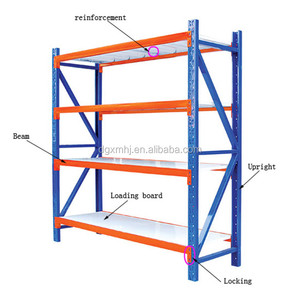
Cheap Storage Warehouse Metal Medium Duty Goods Stacking Racks
- Load: 200 - 800 kg per beam tier
- Modular boltless slot-in design
- Powder coated Q235B high-grade steel
Direct from our certified China manufacturing base to Chicagoland freight terminals. Optimized for GMA 48"×40" pallets, cold chain high-cube racking, and dense e-commerce picking corridors.
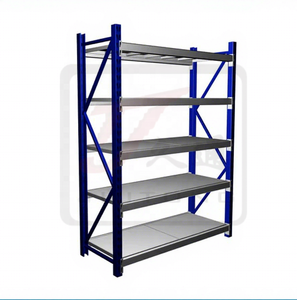
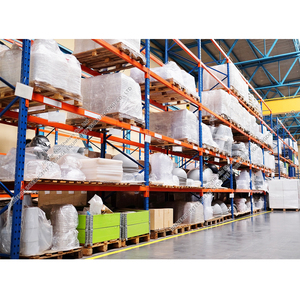
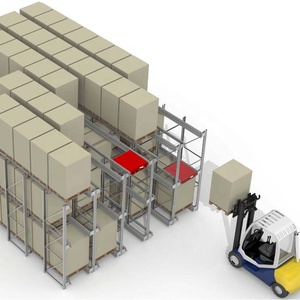
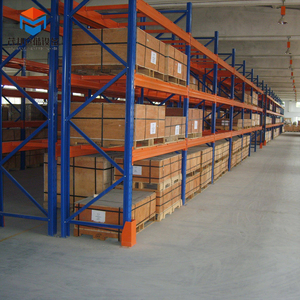
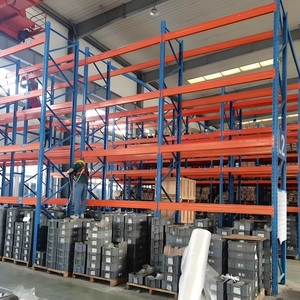
The Greater Chicago metropolitan area—spanning Cook County, Will County, DuPage, and extending into Northwest Indiana—stands as the undisputed inland freight and logistics capital of North America. With intersecting Class I railroad mainlines, direct highway corridors (I-55, I-80, I-90, I-94, and I-294), and massive inland ports in Joliet and Elwood, Chicago warehouse space commands high operational premiums. As industrial lease rates have escalated across submarkets from the O'Hare cargo ring to the I-80 distribution corridor, supply chain executives, general contractors, and material handling dealers face mounting pressure to optimize storage cubic volume while aggressively controlling capital expenditures (CapEx).
Procuring selective pallet racking directly from top-tier Chinese manufacturers has transitioned from an opportunistic cost-saving tactic into an institutional strategic advantage. Historically, domestic U.S. racking procurement was dominated by domestic manufacturers with high structural margins, extensive lead times (often 16 to 24 weeks during peak construction cycles), and rigid dimensional standards. By partnering directly with advanced manufacturing facilities like Guangzhou Heda Shelves Co., Ltd., Chicago operations realize 25% to 40% net landed savings, fully engineered teardrop compatibility, and guaranteed 15-to-30 day manufacturing cycles tailored precisely to North American standard GMA (48" × 40") pallets.
Information Gain Metric: Sourcing direct from China eliminates two to three layers of domestic distribution markups. Even after factoring in trans-Pacific container freight, intermodal rail transport from West Coast ports directly to Chicago's Corwith or Logistics Park Chicago (LPC) terminals, and Section 301 tariffs, the net landed cost per pallet position remains structurally lower while delivering superior steel yields and powder-coat finish tolerances.
A primary consideration among Chicago structural engineers, warehouse plan reviewers, and municipal building inspectors (such as the City of Chicago Department of Buildings) is material equivalence. High-integrity Chinese racking manufacturers utilize cold-rolled structural steel coils conforming to GB/T 700 Q235B and GB/T 1591 Q355B. When evaluated alongside American Society for Testing and Materials (ASTM) specifications:
| Steel Designation | Equivalent Standard | Minimum Yield Strength (Fy) | Tensile Strength (Fu) | Elongation (%) | Structural Applicability |
|---|---|---|---|---|---|
| Q235B Cold-Formed | ASTM A1011 SS Grade 36 / ASTM A36 | 235 MPa (~34,100 PSI) | 370 - 500 MPa | ≥ 26% | Standard uprights, step beams, cross ties |
| Q355B High-Strength | ASTM A572 Grade 50 / ASTM A1011 Grade 50 | 355 MPa (~51,500 PSI) | 470 - 630 MPa | ≥ 21% | Heavy-duty seismic baseplates, high-bay columns (>30 ft) |
| Domestic US Cold-Rolled | ASTM A1011 Commercial Steel | 33,000 - 36,000 PSI | 45,000 - 55,000 PSI | ≥ 20% | Conventional domestic roll-formed teardrop racks |
Every production run at our factory is validated via Mill Test Certificates (MTC conforming to EN 10204 3.1) documenting chemical compositions (carbon, manganese, silicon, phosphorus, sulfur) and mechanical tensile testing. This guarantees that beam deflection complies strictly with ANSI MH16.1 thresholds (Deflection ≤ L / 180 under full design load), giving structural engineers the data sets required for PE-stamped calculation packages in Illinois jurisdictions.
In high-velocity Midwest supply chains, choosing between standard selective racking, high-density radio shuttle, or push-back racking determines your ultimate throughput per square foot. Below is the comparative engineering matrix utilized by our CAD design engineers:
| Racking Architecture | Storage Density | Selectivity | Stock Rotation | Floor Area Utilization | Optimal Chicago Warehouse Application |
|---|---|---|---|---|---|
| Selective Pallet Racking | Standard (Baseline) | 100% Direct Access | FIFO / LIFO Flexible | 35% - 40% | Multi-SKU 3PLs, E-Commerce fulfillment, retail redistribution |
| Double Deep Selective | Medium (+30%) | 50% Immediate Access | LIFO (Last-In, First-Out) | 50% - 55% | Bulk manufacturing reserve storage, identical lot sizes |
| Radio Shuttle Automation | Ultra-High (+80%) | Channel-Level Access | Software FIFO / LIFO | 70% - 80% | Sub-zero cold storage, food & beverage processing hubs |
| Push Back Racking (2-5 Deep) | High (+45%) | Aisle-Face Only | Strict LIFO | 55% - 65% | Consolidated freight terminals, staging lanes, automotive |
| Medium Duty Longspan | Manual Picking | 100% Manual Hand-Pick | Continuous Sorting | Variable (Multi-Tier) | Spare parts depots, parcel sorting, pharmaceutical distribution |
Different submarkets in the Chicago metropolitan area encounter unique structural, operational, and climate demands. Here is how our engineered systems are deployed across the region.
Home to the CenterPoint Intermodal Center (North America's largest inland port), this submarket handles high-velocity intermodal containers arriving from railheads. Operations demand rapid turnarounds, 100% selectivity, and compatibility with heavy standard GMA pallets.
Characterized by legacy infill buildings with clear heights between 20 and 28 feet and premium square footage costs. Air freight forwarders and high-value e-commerce distributors must squeeze maximum cubic density out of older building envelopes.
Chicago's longstanding meat, poultry, and processed food industry requires high cubic efficiency in refrigerated (+34°F) and blast freezer (-20°F) facilities where conditioned electrical refrigeration represents the highest utility expense.
Procuring selective pallet racking for a facility in the City of Chicago, Cicero, Bedford Park, or suburban municipalities requires meticulous adherence to local building codes. In Illinois, building departments require racking systems over 8 feet in height to be permitted as structural fixtures under the International Building Code (IBC) and the Chicago Building Code (Title 14B).
Common compliance hurdles that delay warehouse occupancy certificates include:
Founded in 2001, Heda Shelves brings 25 years of specialized storage manufacturing, supporting commercial logistics operations globally with uncompromised engineering accountability.
30,000 m² advanced production facility generating up to 30,000 metric tons per month. Large-scale Chicago 3PL projects are fulfilled in continuous rollouts.
Punching patterns precision-engineered on CNC stamping dies to interface seamlessly with mainstream North American teardrop uprights and step beams.
Accredited under ISO 9001:2015 (No. 18624Q00169R0M) and European CE (No. 2435-CPR-8605159). Documented quality tracking from coil to container.
Complimentary 2D DWG and 3D layout renderings, bill-of-materials optimization, clear component tagging, and dedicated English-speaking technical support.
Every component destined for Chicago facilities undergoes rigorous quality inspections at every stage of fabrication to ensure zero field-assembly friction.
Incoming Q235B/Q355B hot-rolled strip coils inspected for thickness tolerance, chemical ratio, and tensile yield strength.
CNC slitting lines shear parent coils into exact structural widths, minimizing camber and burr defects.
Continuous hydraulic stamping lines punch teardrop or square profile pitches at exact 2" (50.8mm) or 50mm centers.
Cold-forming through 16 to 22 sequential roll stations shapes columns and step beams with precise structural flanges.
Automated multi-axis robotic welding cells attach beam end-connectors with deep-penetration, slag-free CO2 shielded seams.
Hot alkaline immersion wash strips oils and cutting coolants to prepare naked steel for chemical etching.
Multi-stage acid pickling removes mill scale, followed by iron-phosphate pre-treatment for superior bonding.
Automated reciprocating spray guns apply 60–80μm durable epoxy-polyester thermosetting powder coatings.
Baking at 190°C–210°C (374°F–410°F) cross-links polymers for impact, abrasion, and chip resistance.
Automated strapping with corner-board protectors, wooden dunnage interleaving, and moisture-barrier wrap for sea transit.
A frequent myth in Midwest industrial purchasing is that shipping heavy steel racking from China to an inland destination like Chicago involves prohibitive freight complexities. In practice, modern containerized intermodal shipping provides predictable schedules and competitive freight rates per ton compared to domestic flatbed trucking over equivalent 1,500-mile distances.
Our export shipping coordinators manage two primary freight routes into the Chicago market:
Ocean transit from Guangzhou/Shenzhen to Port of Los Angeles / Long Beach or Tacoma (14–18 days). Immediate transfer to dedicated Class I rail (BNSF or Union Pacific) intermodal express trains direct to Chicago railyards.
Container ships navigate via the Panama Canal direct to Port of Houston or Norfolk/New York, continuing by rail or regional heavy-haul drayage directly to your warehouse loading dock in Cook or Will County.
Frames and beams are engineered to nest into 40ft High-Cube (40HQ) containers, maximizing structural weight up to the 44,000 lb (approx. 20,000 kg) legal road limits or utilizing heavy-weight overweight drayage permits.
In-depth answers addressing real technical, regulatory, and financial considerations when importing pallet racking into Illinois.
Yes. Our automated CNC punching dies produce the North American standard 2-inch center teardrop configuration. This ensures our step beams drop into standard Interlake Mecalux, Speedrack, or Ridg-U-Rak teardrop upright frames, and conversely, our uprights accept standard US step beams. Locking pins with safety clips are included to prevent beam dislodgement under forklift impact.
We provide full structural CAD engineering drawings (including plan layouts, elevation cross-sections, frame details, and baseplate dimensions) alongside complete metallurgical certified test reports. Your local Illinois-licensed Professional Engineer (PE) or your chosen local installer utilizes our engineering package to run site-specific seismic and concrete slab calculations, stamping the drawings for building department approval.
For standard GMA (48" deep × 40" wide) pallets with typical 2500–3000 lb weights, the industry standard layout utilizes 42" deep upright frames (allowing a 3" pallet overhang front and rear) and 96" or 108" clear-span step beams. A 96" beam holds two 40" pallets with 4" clearance between pallets and uprights, while 108" beams accommodate two oversized pallets or three lightweight totes.
Pallet racking components fall under HTS code 7308.90. Even when factoring in prevailing Section 301 tariffs, our factory-direct pricing remains 25% to 40% lower than purchasing from domestic regional distributors who mark up stock inventory. We work seamlessly with your preferred US Customs Broker or arrange complete DDP (Delivered Duty Paid) terms directly to your warehouse dock in Cook, Will, or DuPage County.
Production at our 30,000 m² Guangzhou facility typically requires 15 to 25 days depending on the project volume. Ocean freight and intermodal rail transport to the Chicago railyard (BNSF/UP) averages 25 to 30 days. Total door-to-door timeline is approximately 6 to 8 weeks—consistently faster than many domestic manufacturers running 16+ week order backlogs during busy construction quarters.
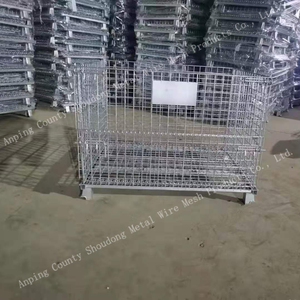
Yes. We manufacture a comprehensive ecosystem of warehouse accessories: heavy-duty flared and step-channel welded wire mesh decking (powder coated or galvanized), pallet support bars, row spacers, column wrap guards, heavy steel aisle-end crash barriers, and drop-in safety locking pins. All accessories ship nested within the primary racking containers to maximize freight efficiency.
Our electrostatic powder coating uses premium thermoset polyester resin powders cured at over 200°C (392°F). Before coating, the steel passes through a 9-stage degreasing, acid pickling, and iron-phosphating pre-treatment. This process prevents delamination, cracking, or rust formation down to -25°C (-13°F), ensuring longevity in unheated cross-docking terminals and refrigerated facilities.
Send your building dimensions, clear ceiling heights, and pallet load profiles. Our senior structural engineers deliver a preliminary 2D/3D CAD design and a transparent, itemized landed price proposal within 24 hours.
Get in touch with our North America project team right now for instant technical support.
Inquire Now