Engineered Warehouse Storage Portfolio
Explore our high-density pallet racking systems, gravity roller live racks, and custom material handling hardware manufactured strictly under ISO 9001:2015 and CE structural standards.
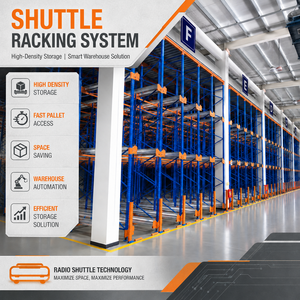
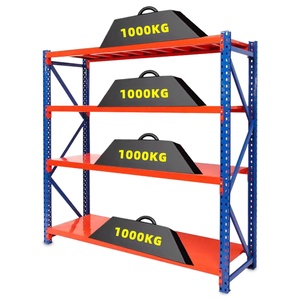
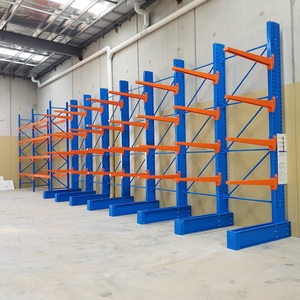
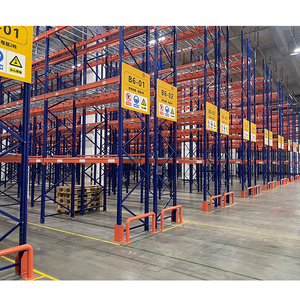
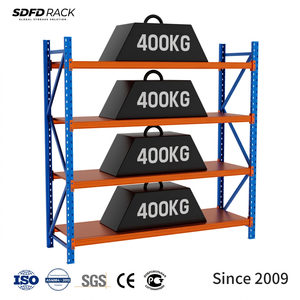
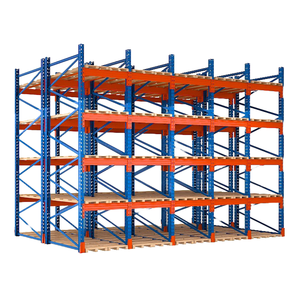
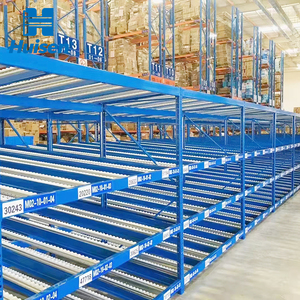
Engineering Foundations of Industrial Flow Through Racking Systems
In high-velocity warehousing and complex fulfillment hubs, dynamic storage systems serve as the critical bridge between storage density and order picking throughput. A Custom OEM Flow Through Racking System (also referred to across global logistics standards as gravity flow racking, pallet live storage, or FIFO roller racking) utilizes inclined roller tracks set at a precise 3% to 4% engineered gradient. Operating strictly by natural gravity, loaded unit loads—from European standard EUR-pallets (1200×800mm) and ISO industrial pallets (1200×1000mm) to heavy steel tote boxes—glide smoothly from the rear replenishment face to the front picking face.
This physical segregation of replenishment operations and active picking lanes completely eliminates logistical bottlenecks, cuts internal forklift transit distances by up to 45%, and enforces flawless First-In, First-Out (FIFO) stock rotation. In sensitive supply chains such as pharmaceutical cold storage, fast-moving consumer goods (FMCG), dairy, and automotive line-side sub-assembly, strict FIFO compliance is non-negotiable. It mitigates product obsolescence, prevents lot degradation, and dramatically reduces forklift handling accidents by establishing dedicated loading and unloading access aisles.
Mechanical Architecture: Rollers, Speed Controllers, and Safety Separators
The functional reliability and operational lifespan of a gravity flow through racking structure depend directly on precision metallurgical selection, structural tolerance standards, and roller-bed engineering. As an experienced OEM flow racking manufacturer, our technical design framework incorporates three fail-safe kinetic regulation technologies:
Full-Width vs. Split Polyurethane Rollers
Fabricated from heavy-duty galvanized structural steel tubing with precision shielded radial ball bearings. Split polyurethane wheel beds are engineered for custom plastic container bases, while heavy full-width steel roller assemblies support loads exceeding 1,500 kg per pallet.
Centrifugal Magnetic Brake Rollers
Integrated at precise pitch intervals within the lane, centrifugal dynamic brake rollers automatically adjust their internal braking torque against pallet momentum. Regardless of ambient temperature fluctuations, pallet speeds are strictly regulated under a safe 0.3 m/s threshold.
Automatic Load Separation Mechanisms
Located at the unloading discharge face, mechanical load separators isolate the forwardmost pick pallet from the cumulative hydraulic backpressure of trailing pallets in deep lanes (up to 20 pallets deep). This guarantees effortless, jam-free extraction for forklifts and reach trucks.
Technical Comparison: Flow Through Racking vs. Alternative High-Density Systems
When logistics directors and supply chain engineers evaluate capital expenditures (CapEx) for modernizing distribution centers, selecting the appropriate high-density storage methodology requires weighing inventory rotation rules, capital costs, structural maintenance overhead, and operational speed.
| Evaluation Parameter | Flow Through (Pallet Flow) | Radio Shuttle Racking | Drive-In Pallet Racking | Push-Back Cart Racking |
|---|---|---|---|---|
| Inventory Rotation Logic | Strict FIFO (First-In, First-Out) | Flexible FIFO or LIFO | LIFO (Last-In, First-Out) | Strict LIFO |
| Operational Energy Cost | Zero Electricity (Passive Gravity) | Lithium Battery / Charging Bays | Forklift Fuel / Electricity | Forklift Thrust (Push-back) |
| Throughput Capacity | Ultra-High (Simultaneous Put & Pick) | High (Constrained by Shuttle Count) | Low to Medium (Aisle Congestion) | Medium (Front face access only) |
| Maximum Lane Depth | Up to 25 Pallets Deep | Up to 40+ Pallets Deep | Up to 10 Pallets Deep | 2 to 6 Pallets Deep |
| Forklift Rack Intrusion | Zero (External aisle picking) | Zero (Lane transfer only) | High (Drives inside rack structure) | Zero (External aisle picking) |
| Structural Wear & Tear | Minimal (Protected uprights) | Low (Track guidance) | High (Frequent beam impacts) | Moderate (Cart rail friction) |
Future Procurement Trends for Warehouse Flow Through Systems
The international procurement of intralogistics racking hardware is undergoing rapid transformation driven by automation, strict carbon footprint accountability, and supply chain volatility. Global procurement directors, 3PL managers, and OEM distributors are focusing on several key technical criteria:
AGV & AMR Picking Interfaces
Modern flow rack discharge faces now incorporate precision-aligned phototransistor brackets, optical sensors, and docking guide cones engineered for Autonomous Mobile Robots (AMRs) and automated guided forklifts.
Decarbonized Cold-Formed Steel
Corporate ESG mandates require verified low-carbon structural steel (Q235B and Q355B grades) with non-toxic, lead-free electrostatic thermoset powder coatings certified compliant with European RoHS directives.
Standardized Multi-Pallet Adaptation
Dynamic lanes configured with dual-track roller geometry capable of transporting disparate pallet designs—including Euro wood pallets, CHEP standard blue pallets, and plastic perimeter slip-sheet bases—without track jamming.
Modular Knock-Down Export Packing
Maximizing shipping container utilization (40ft High Cube containers) through nested roll-formed upright designs, quick-connect roller cassettes, and color-coded crating that slashes ocean freight costs by up to 30% per cubic meter.
Industrial Evolution: How Smart Technology is Upgrading Passive Flow Racks
While gravity-driven flow racking has traditionally been viewed as purely mechanical hardware, the modern logistics landscape is integrating digital monitoring and hybrid kinetic technology to meet the demands of Industry 4.0 fulfillment centers:
IIoT Brake Roller Thermal Telemetry
High-speed distribution operations handling 24/7 continuous flows are adopting telemetry-enabled brake rollers. Built-in micro-sensors detect friction heat signatures, abnormal rotational deceleration, or bearing wear, dispatching preventive maintenance alerts to warehouse management software (WMS).
Integrated Pick-to-Light (PTL) Channels
For piece picking and carton flow through operations, factory-drilled frame punch-outs accommodate concealed low-voltage power buses and snap-on digital display modules, improving order accuracy to 99.98% in e-commerce fulfillment hubs.
Extreme Sub-Zero Metallurgy for Cold Chain
Frozen food logistics operating at -30°C introduces severe metal embrittlement and roller lubrication freezing. Contemporary flow systems utilize custom cold-drawn alloy steels with low-temperature synthetic lubricants that preserve dynamic friction co-efficiency without seizing.
Enterprise Capability & Direct OEM Advantage
Guangzhou Heda Shelves Co., Ltd. has stood at the forefront of heavy-duty industrial storage design, precision engineering, and worldwide logistics export since 2001.
30,000 m² Intelligent Production Plant
Equipped with fully automated continuous roll-forming lines, computerized multi-axis CNC punching presses, robotic seam welding stations, and a dual-line automated electrostatic powder-coating facility capable of delivering 30,000 tonnes monthly.
Verified European CE & ISO Certifications
Our structures and production management are verified by CE Certificate No. 2435-CPR-8605159, ISO 9001:2015 Certificate No. 18624Q00169R0M, and comprehensive structural calculation documentation referencing EN 15512, EN 15620, and FEM standards.
Complimentary 3D & CAD Layout Engineering
Our dedicated engineering department (comprising 300+ technical and production specialists) prepares complete structural drawings, 3D spatial simulations, and load stress analysis diagrams within 24 to 48 hours for tender evaluations.
Worldwide Proven Track Record
With more than 25 years of engineering experience, our systems have been installed in over 10,000 warehouse projects across 120+ countries, serving premier 3PL providers, pharmaceutical cold stores, automotive OEM plants, and retail distributors.
Full OEM & Private-Label Customization
Custom upright pitch profiles (50mm / 75mm), specialized high-load beam connectors, specific RAL powder-coat hues matched to client branding, personalized stamping, and seaworthy bundle-packing designed for swift unloading.
Direct Port Logistics & Installation Support
Close proximity to major international ports ensures streamlined FOB, CIF, or DDP shipments. Every consignment includes piece-by-piece assembly manuals, numbered packaging labels, and remote or on-site engineering supervision.
Frequently Asked Questions for Sourcing Flow Through Racking
In-depth answers addressing structural engineering, pallet compatibility, safety protocols, and commercial terms for B2B procurement professionals.
What structural slope angle is required for heavy-duty pallet flow through racking?
How does a gravity flow system prevent pallets from impacting each other at excessive speeds?
Can our existing wooden and plastic pallets be utilized in an OEM flow through system?
What safety mechanisms prevent pallet collapse or extraction jamming at the picking face?
How does cold storage environments (-20°C to -30°C) affect gravity flow through components?
What documentation and certifications are supplied with an export project?
What information is needed to obtain a comprehensive technical layout and OEM price quote?
Request an Engineered Layout & Direct Factory Quotation
Consult directly with our structural engineering team. We provide complimentary 2D/3D CAD layout proposals, pallet roll velocity calculations, and competitive OEM factory pricing tailored to your logistics facility.