Industrial Pallet Racking Systems: Heavy-Duty OEM/ODM Configurations
Precision-manufactured from high-yield Q235B and Q355B structural steel, our modular warehouse racking lines undergo automated cold-roll forming, continuous punch-indexing, and automated electrostatic powder coating to ensure reliable performance across global logistics environments.
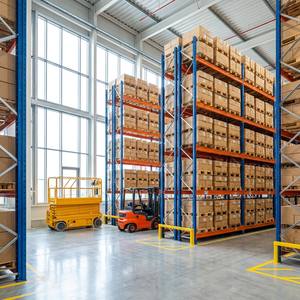
Warehouse Equipment Heavy Duty Pallet Rack Steel Storage Racking
- Up to 4,500 kg/level capacity
- 50mm/75mm adjustable pitch
- EN 15512 & RMI certified
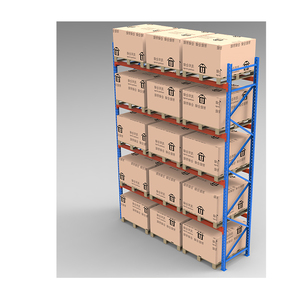
Heavy Duty Adjustable Metal Shelves Racking System Stacking Storage
- Modular interlocking uprights
- Dual-slot safety connector pin
- High abrasion resistance
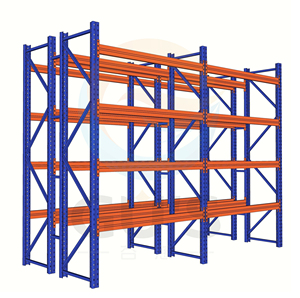
Warehouse Pallet Racking Shelves Unit Industrial Heavy Duty Rack
- Multi-tier picking platform integration
- Custom upright gauge 1.5–2.5mm
- Precision robotic GMAW welds
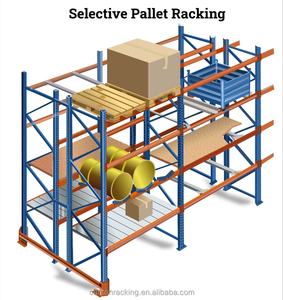
Double Deep Pallet Racking System for Space Optimization
- 50% fewer operational aisles
- Deep-reach pantograph compatible
- Seismic restraint bracing kits
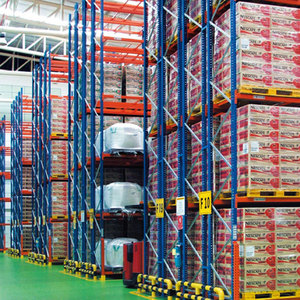
Heavy Duty Double Deep Steel Pallet Racking Anti-Corrosion
- Hot-dip zinc coating >65μm
- Freezer rated down to -30°C
- Chemical washdown compliance
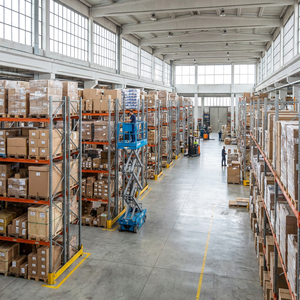
High Density Pallet Storage Rack Heavy Duty Warehouse Equipment
- Drive-In / Drive-Through options
- 80% volumetric efficiency
- Reinforced guide rail profiles
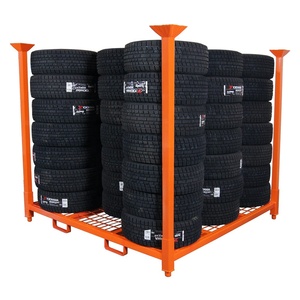
Customized Heavy Duty Portable Stackable Tire Storage Racks
- 1,000 kg stacking limit (4-high)
- Detachable post architecture
- Forklift pocket protection channels
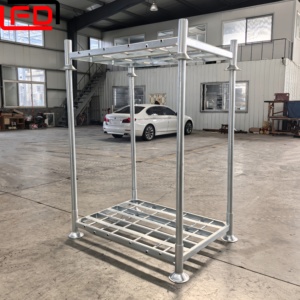
Hot-Dip Galvanized Stackable Post Pallet Metal Stillages
- Weatherproof outdoor yard storage
- Self-nesting conical cup feet
- Heavy structural tube design
Why Global Supply Chains Trust Our OEM/ODM Racking Manufacturing
Operating since 2001, Guangzhou Heda Shelves Co., Ltd. combines more than two decades of structural manufacturing authority with state-of-the-art roll forming and finishing technology. Serving 120+ export territories across Europe, the Americas, and APAC, our engineering infrastructure guarantees compliance with regional building and safety codes.
Third-Party Certified Safety
Every frame, connector, and beam assembly is fully certified to CE Certificate No. 2435-CPR-8605159, ISO 9001:2015 No. 18624Q00169R0M, and RoHS standards. Structural load tables are fully aligned with EN 15512, EN 15620, and RMI MH16.1 specifications.
Complimentary 3D & CAD Layouts
Our dedicated structural engineering team provides full spatial planning, aisle clearance optimization, dynamic turning radii evaluations, and 3D renderings before production begins, preventing costly onsite interference with HVAC, fire sprinklers, and column footings.
Continuous Roll-Forming Lines
Equipped with computerized high-speed multi-station rolling machines, laser-guided punch tooling, and automated robotic MIG/MAG welding stations, our production achieves dimensional tolerances under ±0.5mm across frame heights exceeding 12 meters.
Full OEM/ODM Branding & Pallet Customization
We engineer custom profiles, punch patterns (teardrop, hex, or diamond keyholes), customized packaging, private-label branding plates, and RAL powder finishes for industrial distributors, racking integrators, and multinational logistics operators.
The Technological Evolution of Industrial Warehouse Racking: 2025–2030
Modern warehousing is no longer merely about static storage density. As intralogistics transitions to automated high-throughput picking, seismic-resilient infrastructure, and carbon-accountable material cycles, racking engineering must evolve accordingly.
Industrial pallet racking is undergoing its most profound structural redesign in four decades. Historical rack design relied largely on over-dimensioned, hot-rolled structural steel profiles that carried high carbon footprints, inflated shipping freight costs, and lacked adaptability. Today's supply chain demands a synthesis of cold-formed high-tensile steel (yielding upwards of 355 to 420 MPa), advanced computerized finite element analysis (FEA), and seamless mechanical synergy with autonomous systems such as Autonomous Mobile Robots (AMRs), Automated Storage and Retrieval Systems (ASRS), and 4-way deep-lane radio shuttles.
Key Engineering Benchmark: According to EN 15512:2020 limit state design methodologies, cold-formed steel racking structures must account for rotational stiffness at beam-end connector nodes, second-order sway imperfections ($P-\Delta$ and $P-\delta$ effects), and floor connection baseplate deformation under high seismic cyclic loading.
Three core evolutionary drivers are reshaping modern industrial rack manufacturing:
1. Dynamic Load Dissipation & Seismic FEA
Modern distribution hubs are built higher, frequently reaching 24 to 40 meters in clad-rack high-bay warehouses. Under seismic events or sudden forklift dynamic impacts, traditional rigid frames undergo localized buckling. Modern OEM engineering deploys closed-box omega cross-sections, optimized diagonal lacing geometries, and semi-rigid dissipative beam connectors that absorb shock energy through calculated inelastic deformation rather than structural collapse.
2. Sub-Zero Cold-Chain Metallurgy & Nano-Coatings
With global frozen food, biomedical, and pharmaceutical cold storage markets accelerating, steel brittleness under cryogenic temperatures (-30°C to -40°C) presents an acute failure risk. OEM factories now mandate Charpy V-notch impact testing at low temperatures for structural coils. Furthermore, pre-treatment has shifted from traditional iron phosphating to 14-stage zirconium silane nanoceramic washings, preventing subsurface corrosion creep underneath electro-applied epoxy powder finishes.
3. High-Precision Mechanical Interfaces for ASRS/AMRs
Autonomous logistics hardware requires millimeter-level dimensional predictability. Unlike human forklift operators who visually compensate for rack beam deflection or rack out-of-plumb deviations, ASRS cranes, mini-load stackers, and optical-guided shuttle vehicles fault when beam deflection exceeds $L/300$ or rail joint gaps surpass 0.5mm. Factory manufacturing lines now apply automated CNC laser perforation and continuous roll calibration to satisfy strict EN 15620 Class 100–400 tolerances.
| System Classification | Volumetric Storage Density | Pallet Selectivity Ratio | Automation Compatibility | Stock Rotation Logic | Optimal Application Scenarios |
|---|---|---|---|---|---|
| Standard Selective Pallet Racking | Baseline (35% - 40%) | 100% (Instant Direct Access) | Manual / Reach Trucks / VNA | FIFO / LIFO Adaptive | Multi-SKU 3PLs, E-Commerce hubs, Retail distribution |
| Double Deep Racking | High (+30% vs Selective) | 50% (Requires Pantograph) | Reach Trucks with Telescopic Forks | LIFO | FMCG, Dry goods with 2-4 pallets per identical SKU |
| Drive-In / Drive-Through | Very High (Up to 75%) | Low (Lane-Restricted) | Standard Counterbalance Forklifts | LIFO (Drive-In) / FIFO (Through) | Cold storage, Bulk raw materials, Seasonal harvest |
| Pallet Live Flow (Gravity Roller) | Extremely High (Up to 80%) | High per lane face | Conveyor / Standard Forklifts | Strict FIFO (Gravity-Fed) | Perishable foods, Pharmaceuticals, High-turnover dairy |
| Radio Shuttle Automation | Maximum Density (85%+) | High per level / lane | Semi-Automated Pallet Carrier | Configurable FIFO / LIFO | Deep-freeze logistics, High-throughput beverage depots |
Future Pallet Rack Procurement Trends: What Global Buyers Must Prepare For
Corporate supply chains, engineering consultants, and commercial developers are transitioning away from localized high-cost intermediaries toward direct-to-manufacturer OEM/ODM partnerships. Navigating global procurement requires analyzing the total cost of ownership (TCO), engineering compliance, and logistics optimization.
Procuring warehouse racking on a mega-scale (over 5,000 to 50,000 pallet positions) involves structural engineering liability and complex international freight logistics. Over the next five years, procurement directors must formulate their equipment sourcing strategies around four critical structural shifts:
TCO Optimization Over Initial Capex
Historically, buyers prioritized lowest upfront cost per pallet position. However, cheap steel profiles lacking structural integrity lead to premature beam sag, column crimping during minor collisions, and failure during mandatory annual EN 15635 rack safety inspections. Purchasing certified, high-strength Q235B/Q355B steel with factory-engineered upright column protectors, heavy-duty floor baseplates, and dynamic anti-impact safety components reduces 10-year facility maintenance downtime by over 38%.
BIM Level 3 & Digital Twin Integration
Global general contractors and logistics operators now require racking manufacturers to supply native Autodesk Revit BIM models with accurate metadata—including exact point loads per baseplate, dynamic unladen resonance frequencies, and anchor pull-out stresses. Factory engineering teams capable of delivering parametric models accelerate municipal warehouse permitting and streamline fire sprinkler, ductwork, and lighting coordination.
Ocean Freight Flat-Pack Engineering
Racking structural profiles are inherently voluminous. Strategic OEM factories design interlocking modular beam nested profiles, welded-on end connectors that stack securely without air wastage, and palletized bundle banding engineered specifically for 40-foot High Cube (40HQ) maritime shipping containers. Proper nested packing yields up to a 35% improvement in container volume utilization, saving tens of thousands of dollars on cross-ocean logistics to EU and US hubs.
Green Steel & Supply Chain Carbon Tracking
With the European Union Carbon Border Adjustment Mechanism (CBAM) and corporate ESG mandates ramping up, Tier-1 logistics providers demand audited Environmental Product Declarations (EPDs) for structural steel. OEM factories investing in scrap-recycled Electric Arc Furnace (EAF) steel feedstocks, closed-loop solar-powered powder coating recovery lines, and non-toxic zinc phosphating achieve a distinct advantage in commercial tender evaluations.
Engineering & Procurement FAQ for Technical Buyers
Get clear, authoritative answers directly from our factory structural engineers regarding certifications, steel grades, deflection calculations, and international installation workflows.
What steel grades are used in heavy-duty racking fabrication, and how is structural capacity verified?
What is the permissible beam deflection ratio under full rated live load?
Can your factory accommodate EUR (1200×800mm), ISO/GMA (1200×1000mm), and custom industrial pallets?
What surface treatment ensures longevity in humid or sub-zero refrigeration conditions?
How are earthquake and seismic requirements integrated into the structural calculations?
What documentation and inspection protocols accompany international shipments?
What are the standard factory manufacturing lead times and maritime shipping terms?
Can you produce customized punch profiles, OEM colors, and distributor private labeling?
Request Engineering Layout & Factory-Direct Wholesale Pricing
Send your warehouse floor plan (DWG/PDF), clear building height, pallet specifications, and forklift parameters. Our engineering department will generate a full 3D layout, load calculation sheet, and itemized quotation within 24 hours.