1000KG / Tier
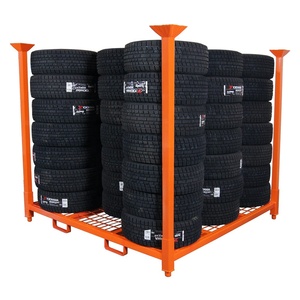
Customized Warehouse Heavy Duty Portable Rack Metal Spare Steel Detachable Stackable Pallet Tire Storage System 1000KG Powder
- Stackable: 4–6 Tiers
- Detachable Posts
- Epoxy Coated
Explore standard-setting pallet systems and stackable modular frameworks custom manufactured directly in our Guangzhou factory. Every SKU is built with certified Q235B/Q355B structural steel, tailored to European EUR/EPAL dimensions and high-density industrial storage thresholds.
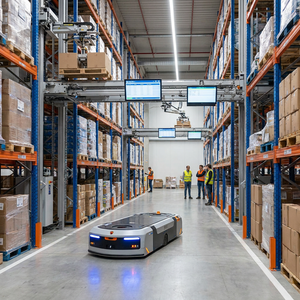
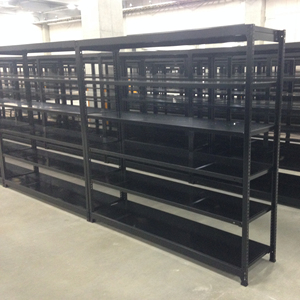
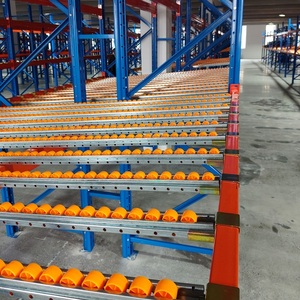
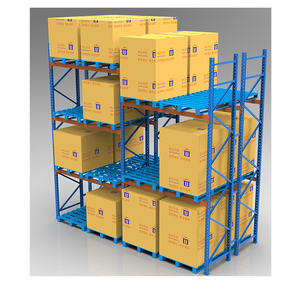
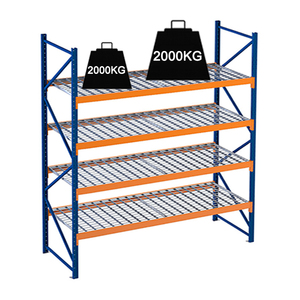
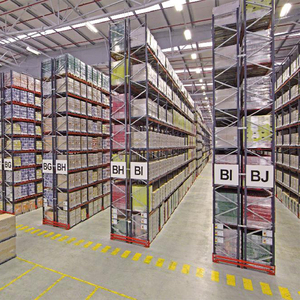
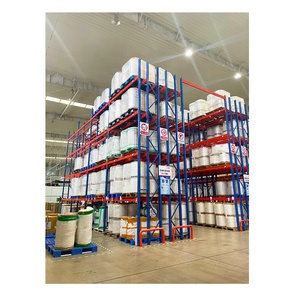
Global distribution centers are undergoing structural modernization driven by land scarcity, automated handling systems (AMR/AGV), and stringent ESG compliance. Enterprise buyers must navigate five critical procurement transformations to maintain long-term capital efficiency.
The convergence of racking frameworks with Automated Guided Vehicles (AGV), Autonomous Mobile Robots (AMR), and Automated Storage and Retrieval Systems (AS/RS) demands manufacturing tolerances that exceed traditional commercial norms. Under EN 15620 Class 100 to 400, deflection limits are compressed to tight tolerances where floor slab settlements and upright verticality variations cannot exceed fractions of a millimeter. Specifiers are shifting contracts from standard cold-formed racking to computer-modeled, laser-aligned upright channels capable of accommodating continuous high-speed crane and shuttle cycle rates without cumulative metal fatigue.
Refrigerated and blast-freezer square footage incurs operational energy expenses up to five times greater than ambient warehouses. Procurement models are moving away from wide-aisle selective racking toward high-density Semi-Automated Radio Shuttle Lanes and multi-tier compact drive-in profiles. By reducing aisle volume and raising storage densities above 80%, facilities lower the mechanical refrigeration tonnage required per pallet position. Racking steel intended for sub-zero operations (-30°C) must be alloyed and treated to avoid brittle fracture, necessitating high Charpy V-notch impact toughness certified under ISO and EN structural benchmarks.
Corporate Scope 3 sustainability targets are reshaping supplier qualification scorecards. Logistics operators and 3PL enterprises now mandate Environmental Product Declarations (EPDs) tracking the embodied carbon of structural cold-rolled steel from iron ore to hot-dip galvanizing. Manufacturers adopting electric arc furnace (EAF) steel sourcing, solvent-free electrostatic powder coatings, and zero-discharge pickling systems receive preferential tender weighting. Furthermore, modular teardown potential—allowing facilities to relocate or reconfigure beam profiles without scrapping upright frames—has become a pivotal factor in multi-year asset lifecycle modeling.
The sustained momentum of rapid e-commerce deliveries has precipitated an urban logistics shift toward multi-tier rack-supported picking platforms and structural mezzanine floors. Industrial real estate premiums prohibit lateral expansions; consequently, logistics operators are erecting 3-to-5 level vertical picking systems. These hybrid structures integrate structural pallet storage on bottom levels with ergonomic carton-flow channels and pedestrian catwalks overhead, maximizing clear warehouse height utilization up to 12–16 meters while adhering rigorously to localized fire egress and sprinkler penetration guidelines.
Modern engineering contracts no longer treat racking as basic static furniture; global building codes enforce classification of heavy-duty industrial storage racks as Engineered Steel Structures subject to seismic and dynamic impact parameters. Under Eurocode 8 (EN 1998) and RMI (Rack Manufacturers Institute) MH16.1 provisions, finite element analysis (FEA) is required to simulate full-load live dynamics under earthquake acceleration. Facilities require certified baseline anchorages, seismic baseplates, and high-ductility upright column sections to mitigate structural collapse risks under peak ground acceleration conditions.
Supply chain fragmentation is causing commercial procurement teams to consolidate vendors. Instead of separately engaging steel rollers, design consultants, freight forwarding brokers, and local installation crews, warehouse developers increasingly partner directly with integrated OEM/ODM manufacturers like Guangzhou Heda Shelves. By securing single-point design-build accountability—spanning free CAD structural layout, certified finite-element load calculations, batch roll-forming, sea-freight packaging, and site installation blueprints—procurement teams minimize scheduling disputes and reduce system costs by 20% to 35%.
The progression of modern intralogistics systems from rudimentary slotted-angle shelving to computer-calculated, cold-formed high-bay racking systems is anchored in structural engineering principles. Below is an engineering appraisal of the load dynamics, metallurgical properties, and connection geometry governing contemporary systems.
Traditional structural hot-rolled channels are heavy and inefficient. Contemporary high-load columns utilize continuously cold-rolled Omega (Ω) cross-sections with up to 12 distinct bending radii. This profiling geometry shifts the center of gravity and increases the radius of gyration, counteracting torsional-flexural buckling under substantial vertical loads. Perforations on 50mm or 75mm pitches are engineered via CNC multi-station punching to retain maximum cross-sectional steel area, guaranteeing safety factors higher than 1.95:1 under rated design capacity.
Beam-to-column node connections represent the critical structural junction during seismic displacement and live fork-truck collisions. Modern OEM systems replace flat end-plates with robotically welded, cold-stamped multi-claw connectors (3-claw, 4-claw, or 5-claw configurations) that envelope the upright face. This mechanical grip establishes a semi-rigid joint connection under EN 15512 standards. Integral spring-loaded steel locking pins resist upward accidental fork dislodgement forces exceeding 5,000 N, preventing spontaneous beam collapse.
Structural reliability centers on deflection performance ($L/200$ or $L/250$ maximum span limits) where beam sag under full rated payload must not impede mechanical clearance for automated handling attachments. Concrete slab fixation requires chemical capsule or mechanical expansion wedge anchors with embedment depths engineered to neutralize floor shear, uplift, and rotational overturning moments. Floor leveling shims and sacrificial steel column guards dissipate low-level kinetic impacts from materials handling equipment (MHE).
An engineer-level performance comparison evaluating storage densities, pallet accessibility, operational methodologies, and recommended application profiles.
| Racking Topology | Pallet Density Ratio | Selectivity | Stock Rotation | Standard Load (kg/Pos) | MHE Forklift Dependency | Primary Industry Sector |
|---|---|---|---|---|---|---|
| Selective Pallet Racking | Baseline (40%) | 100% Direct | FIFO / LIFO | 500 – 4,000 kg | Counterbalance, Reach | 3PL Hubs, General Wholesale, Retail DCs |
| Double Deep Racking | Medium (60%) | 50% Direct | LIFO | 1,000 – 2,500 kg | Pantograph Double-Reach | FMCG, Dry Food Distribution, Cold Stores |
| Drive-In / Drive-Through | High (75%) | Low (Lane Based) | LIFO (FIFO Option) | 1,000 – 2,000 kg | Narrow Counterbalance | Beverage Bottlers, Cold Storage, Seasonal Batch |
| Radio Shuttle System | Ultra-High (85%) | High by Lane | FIFO / LIFO | 500 – 1,500 kg | Standard Forklift + Shuttle | Frozen Distribution, Protein Processing, High-Velocity SKU |
| Gravity Pallet Flow | High (70%) | High at Pick Face | Strict FIFO | 500 – 1,500 kg | Standard Loading/Unloading | Pharmaceutical, Perishable Food, High-Turnover Buffers |
| Push-Back Rack (Carts) | Medium-High (65%) | Moderate (2–6 Deep) | LIFO | 500 – 1,400 kg | Standard Counterbalance | Manufacturing Buffer, Chemical Raw Materials |
| Cantilever Racking | Custom Density | 100% Open Front | Unrestricted | 500 – 5,000 kg/Arm | Side Loader, Multi-Directional | Timber, Extrusions, Steel Pipes, Sheet Panels |
| Rack-Supported Mezzanine | Double/Triple Floor | 100% Manual/Pick | Zonal Dynamic | 300 – 1,000 kg/m² | Vertical Lifts, Pallet Jack | E-Commerce Picking, Garment Sorting, Spare Parts |
Founded in 2001, Guangzhou Heda Shelves Co., Ltd. operates a high-capacity manufacturing facility spanning 30,000 square meters, supported by 300+ seasoned engineers, metal fabricators, and project specialists. Producing upwards of 30,000 metric tonnes of cold-formed steel racking systems every month, we provide global B2B clients with an accountable, factory-direct partnership that eliminates distributor markups and operational delays.
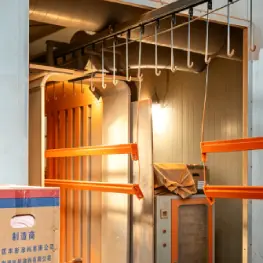
From custom profile rolling and pre-treatment finishing to precision computerized punching and automated welding, all key production stages occur within our self-contained facility in Guangzhou, China. Whether you require bespoke OEM color schemes to match corporate identity or full ODM engineering design to navigate non-standard building columns and floor loadings, HEDA Shelves delivers verified compliance with European and International safety frameworks.
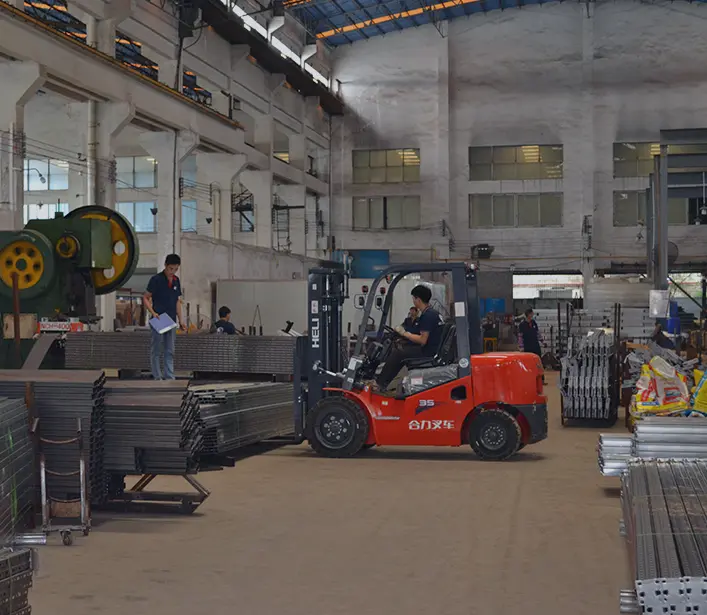
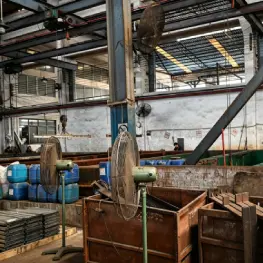
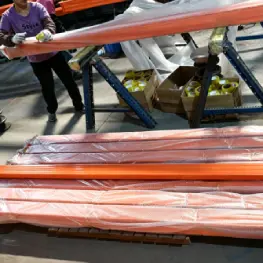
Stringent quality control inspections are integrated into every milestone of structural profile conversion.
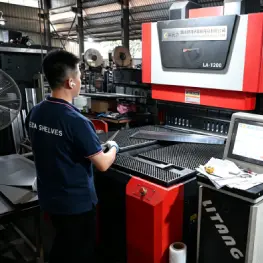
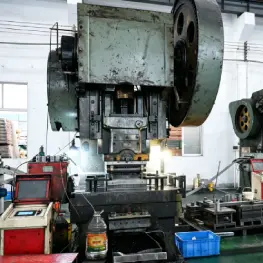
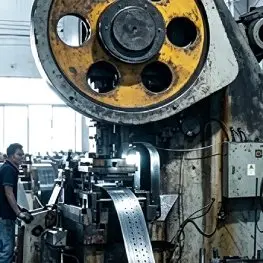
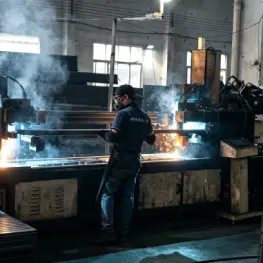
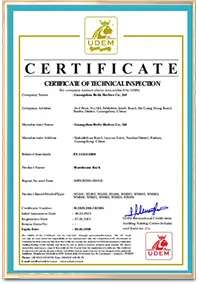
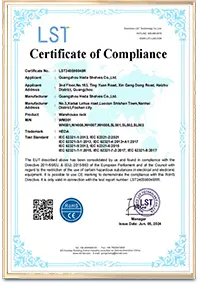
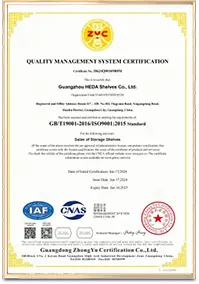
Independently audited engineering credentials providing procurement security for commercial buyers.
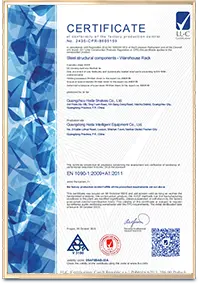 CE Cert: 2435-CPR-8605159
 ISO 9001:2015 #18624Q00169R0M
 Structural Static Test Report
 RoHS & Safety Compliance
Technical guidance covering manufacturing tolerances, engineering calculations, sea freight packaging, and international standards compliance.
Yes. Every racking bay can be engineered around EUR 1 (1200 × 800 mm), EUR 2 (1200 × 1000 mm), and customized industrial pallet specifications. Beam clear widths (typically 1850mm for two-pallet bays or 2700mm for three-pallet bays) and frame depths (1050mm or 1100mm) provide optimal 75–100mm pallet clearance and 50mm rear overhang per EN 15620 guidelines.
We supply CE Certification (Certificate No. 2435-CPR-8605159) and ISO 9001:2015 certification (#18624Q00169R0M). For enterprise projects, our engineering department provides comprehensive CAD drawings, structural calculation packs based on EN 15512 and FEM 10.2.02 codes, raw steel mill test certificates (MTC), and official maximum load safety rating plaques.
Standard production cycles range between 15 and 30 days depending on total container volume and coating complexity. Ocean freight from our local Guangzhou/Shenzhen port terminals to major international container ports (such as Rotterdam, Hamburg, Antwerp, Valencia, and Felixstowe) averages 28 to 38 days. Complete CIF, FOB, and DDP terms can be structured.
To deliver an engineered layout, please provide: (1) Architectural floor plan (DWG or dimensioned PDF) displaying building columns and fire exits; (2) Clear under-beam / eaves height; (3) Pallet specifications (Length x Width x Height, including product overhang); (4) Maximum gross load weight per pallet; (5) Forklift model, turning radius, and max mast lift height.
Every consignment is packed with detailed component tagging, itemized bills of materials (BOM), step-by-step assembly diagrams, and torque specification manuals for anchor and splice bolting. We provide real-time remote engineer oversight during installation. For multi-tier mezzanines or major high-bay builds, we can dispatch on-site installation supervisors to direct your local crew.
Yes. We act as an OEM/ODM manufacturing engine for racking brands, materials handling equipment dealers, and industrial system integrators globally. Services encompass custom hole-punching geometries (teardrop, hex, diamond), bespoke connector tooling, client-branded label plates, custom carton packaging, and powder-coat matching to any designated RAL color code.
Components undergo an automated 5-stage pre-treatment wash including chemical degreasing, acid pickling, rinsing, and zirconium/iron phosphating to ensure chemical bonding. Parts are then coated with architectural-grade epoxy-polyester powder (60–90 microns thickness) and cured at 200°C. For open yards or high-humidity regions, we offer hot-dip galvanization to EN ISO 1461 standards.
Uprights and beam bundles are strapped into custom timber saddles using heavy-duty PET strapping and edge protectors, oriented to allow rapid fork un-stuffing. Small parts (brackets, baseplates, shims, locking pins) are crated in seaworthy, fumigated wooden cases. Packing is calculated via 3D container stuffing software to maximize tonnage utilization up to shipping weight limits without crushing bottom bundles.
Engage directly with our structural engineering team to calculate load thresholds, beam dimensions, and bay layouts for your storage facility. We return comprehensive 2D CAD layouts, 3D spatial renders, and itemized factory-direct commercial estimates within 24–48 hours.
Connect with a senior intralogistics engineer for an immediate technical review of your facility layout.
Direct Engineering Review • CE & ISO 9001 Certified • Free CAD Design