Featured Commercial & Heavy-Duty Warehouse Storage Racks
Engineered for intense material handling operations, cold-formed from high-tensile structural steel (Q235B / Q355B / SS400) and certified under CE & ISO 9001:2015 quality frameworks.
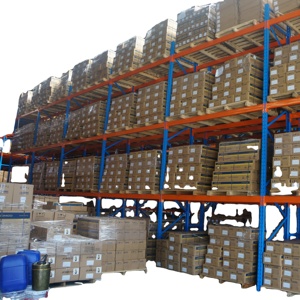
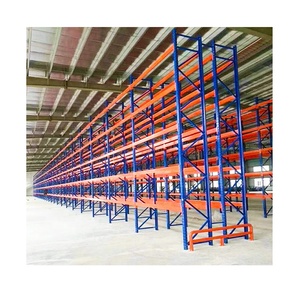
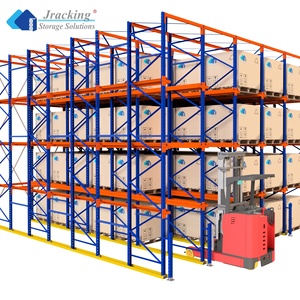
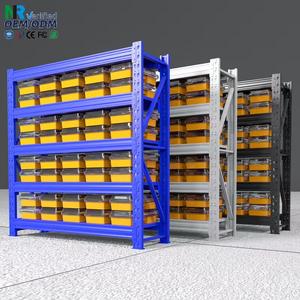
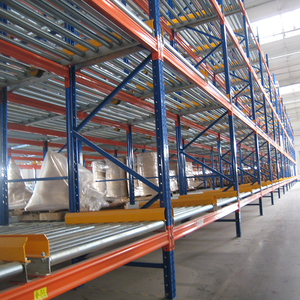
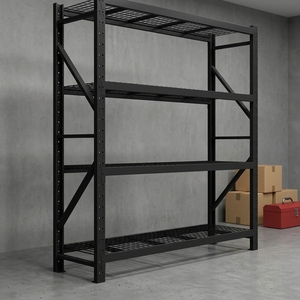
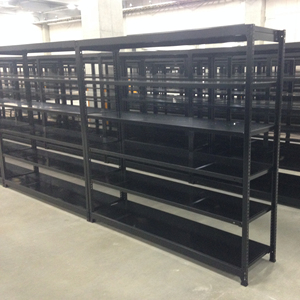
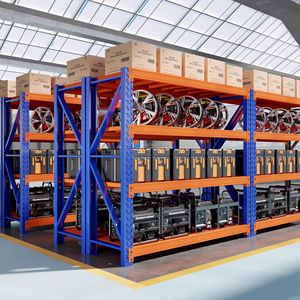
Engineering Principles Governing Commercial Racking Procurement
Specifying commercial steel racking requires rigorous adherence to limit state design, dynamic horizontal load mitigation, and European or American seismic design standards.
Global logistics facilities and high-velocity distribution centers (DCs) demand structural steel storage systems that operate under substantial dead and live loads. When evaluating manufacturers, procurement engineers must transcend raw cost-per-bay comparisons. Modern storage rack design is governed by two predominant international codes: EN 15512:2020 (Steel static storage systems – Adjustable pallet racking systems – Principles for structural design across Europe) and ANSI MH16.1 / RMI (Specification for the Design, Testing and Utilization of Industrial Steel Storage Racks in North America).
A primary consideration is the steel grade selection and yield stress tolerance. Qualified exporters deploy certified hot-rolled coils or cold-rolled structural sheets graded at minimum Q235B (yield strength ≥ 235 MPa) up to high-strength Q355B / S355JR (yield strength ≥ 355 MPa) for tall upright columns exceeding 9 to 12 meters. Column profiles feature optimized geometry—such as multi-bend Omega sections or closed-box configurations—designed to prevent local buckling, torsional-flexural buckling, and distortional buckling under combined axial compression and bending moments.
Furthermore, connector beam-to-column looseness and rotational stiffness ($C_d$) dictate the overall lateral frame displacement under seismic sway and forklift impact forces. Certified producers submit their proprietary beam end connectors to physical five-finger reverse moment tests to calculate allowable design moments according to EN 15512 Annex A. Without third-party verified test data, racking installations run severe risks of progressive structural collapse under peak seismic accelerations ($a_g$).
Top 10 Commercial Rack Shelving Manufacturers & Exporters
A peer-reviewed benchmark of the industry's leading manufacturers, evaluating factory output capacity, international certifications, automation synergy, and export agility.
Guangzhou Heda Shelves Co., Ltd. (HEDA Shelves)
Guangzhou, China • Est. 2001 • Direct Manufacturer & Global ExporterSSI Schaefer Group
Neunkirchen, Germany • Intralogistics & Automated High-Bay RacksMecalux, S.A.
Barcelona, Spain • Pallet Racks, Automated Shuttles & WMSDaifuku Co., Ltd.
Osaka, Japan • Material Handling Systems & High-Density RacksDexion (Gonvarri Material Handling)
Europe • Slotted Angle Pioneer & Industrial Storage RacksStow Group (Movu Robotics)
Dottignies, Belgium • Pallet Racks & Sub-System AutomationInterlake Mecalux Inc.
Chicago, USA • Teardrop Pallet Racking & Structural Roll-FormingJungheinrich AG
Hamburg, Germany • Forklifts, VNA Systems & RackingBITO-Lagertechnik Bittmann GmbH
Meisenheim, Germany • Boltless Shelving & Carton Live StorageFrazier Industrial Company
Long Valley, NJ, USA • 100% Structural Steel Pallet RackingKey Engineering Specifications & Operational Compatibility
Direct structural comparison between primary commercial racking architectures to aid engineers and procurement managers during preliminary facility specification.
| Racking Architecture | Floor Space Utilization | Direct Pallet Accessibility | Stock Rotation Strategy | Max Deflection Ratio (L/d) | Typical Investment CAPEX |
|---|---|---|---|---|---|
| Standard Selective Pallet Rack | 40% - 50% | 100% Immediate Access | FIFO / LIFO Unrestricted | L/200 (Class 100 / EN 15512) | Lowest / Cost-Efficient |
| Very Narrow Aisle (VNA) | 60% - 70% | 100% (Turret / Stacker) | FIFO / LIFO Flexible | L/200 to L/300 | Moderate |
| Drive-In / Drive-Through | 75% - 85% | Last Pallet in Lane Only | Strict LIFO (FIFO if Drive-Thru) | L/250 (Continuous Beam) | Moderate |
| Semi-Automated Radio Shuttle | 85% - 90% | Batch / Lane Dependent | Dynamic FIFO or LIFO | L/250 (High-Precision Rails) | Moderate-High |
| Gravity Pallet Flow | 80% - 88% | Picking Face Only | Automatic Strict FIFO | L/200 (Braked Rollers) | High (Roller Tracks) |
| Rack-Supported Mezzanine | 100% Cube Doubling | Multi-Level Manual / Trolley | High-Density SKU Sorting | L/300 Floor / L/200 Racking | Highly Economical vs Civil |
Future Procurement Trends & Racking Evolution (2025–2030)
Emerging design philosophies, regulatory shifts, and technological disruptions influencing commercial and industrial storage investments worldwide.
High-Strength Micro-Alloy Thin-Walled Steel Profiles
Escalating international raw material prices and container freight tariffs are driving structural engineers toward high-strength, micro-alloyed cold-formed steels (such as S420MC and S550MC). By leveraging multi-stage roll-forming with longitudinal stiffeners on the column webs and flanges, racking profiles achieve greater load-bearing capacity with up to 15% to 22% less net steel mass, dramatically reducing shipment weight.
Carbon Border Adjustment (CBAM) & EPD Auditing
Global buyers, particularly throughout the European Union and the UK, increasingly mandate third-party certified Environmental Product Declarations (EPD). With the EU CBAM mechanism taking full financial effect, tier-1 manufacturers utilize energy-efficient blast-furnace electric arc routes and heavy-metal-free electrostatic powder coatings that emit zero volatile organic compounds (VOCs).
AMR, AGV & Automated Shuttle Floor-to-Rack Synergy
Forklift-free automated warehouses are shifting layout tolerances. Autonomous Mobile Robots (AMR) and radio shuttle carriers require sub-millimeter level installation alignments across baseplate levelness, rack upright plumblines, and pallet backstop sensor flags. Modern commercial racks incorporate integrated barcode targets, LiDAR guidance strips, and smart load-cell deflection sensors.
Nanotech Pre-Treatment & Anti-Corrosion Longevity
Traditional chemical degreasing is rapidly being replaced by environmentally safe zirconium silane conversion coatings and automated multi-stage pickling and phosphating lines. When combined with cured polyester-epoxy powder formulations, racking members achieve ASTM B117 salt spray ratings exceeding 500 to 1,000 hours, extending operational service lives within sub-zero food freezer rooms down to -30°C.
Direct Factory-to-Jobsite Modular Customization
International logistics operators increasingly avoid intermediary local distributors by partnering directly with agile export manufacturers capable of producing custom beam spans, frame depths, and bespoke corporate RAL colors. Shipped with fully pre-assembled diagonal frame bracings, modular footplates, and detailed 3D installation blueprints, on-site erection time is reduced by up to 35%.
Predictive Maintenance & EN 15635 Inspection Audits
Warehouse occupational safety directives, such as the European EN 15635 standard (Application and maintenance of storage equipment), place legal liability on facility operators to conduct recurring rack damage audits. Modern manufacturers now furnish racking components with integrated impact-resistant polymer column protectors and serialized laser-etched QR codes linking components directly to original load tables.
Engineering Excellence: HEDA Shelves Production Ecosystem
An inside look at our 30,000 m² automated production infrastructure, rigorous quality control protocols, and verified compliance milestones.
Operating out of Guangzhou, China, Guangzhou Heda Shelves Co., Ltd. (HEDA Shelves) provides end-to-end industrial racking and shelving systems engineered for demanding commercial warehouses worldwide. Supporting hundreds of logistics integrators, material handling distributors, and multinational end-users across Europe, the Americas, Oceania, and Southeast Asia, HEDA eliminates intermediary markups by executing 100% of precision fabrication in-house.
Our quality management infrastructure operates under strictly audited certifications: CE Certificate No. 2435-CPR-8605159, ISO 9001:2015 Certificate No. 18624Q00169R0M, and full European Union RoHS compliance. Structural calculations reference EN 15512:2020 limit state criteria, verifying moment capacities, shear limits, and weld joints across every project prior to container loading.
Our Standardized 10-Stage Precision Manufacturing Workflow
Frequently Asked Questions by Industrial Sourcing Teams
Essential technical, compliance, and logistics clarifications addressed by our senior structural engineering team.
Can HEDA Shelves configure racking systems around standard European EUR/EPAL pallet specifications?
Which third-party certifications and engineering calculation dossiers are provided for municipal or building authority permitting?
What are the standard production lead times and maritime transit schedules to major global sea ports?
- Major European Hubs (Rotterdam, Hamburg, Antwerp, Felixstowe, Valencia): 28 to 35 days
- North American West Coast (LA, Long Beach) & East Coast (NY, Savannah): 14 to 28 days
- Middle East & GCC (Jebel Ali, Dammam): 14 to 20 days
- Australia & New Zealand (Sydney, Melbourne, Auckland): 12 to 18 days
How does cold-rolled thin-walled steel racking perform under sub-zero cold storage and blast freezing environments?
What structural data is required from the client to generate an engineered 2D/3D layout proposal?
- Architectural floor plan (DWG or PDF) indicating building clear height, column grids, dock doors, and obstruction zones.
- Concrete slab specification (thickness, compressive strength $f'_{c}$, and rebar mesh detail).
- Unit load profiles: Pallet width, depth, overall height (including pallet board), and gross weight per unit.
- Material handling equipment: Forklift model, mast collapsed/extended height, turning radius ($A_{st}$), and maximum lift height.
- Operational environment: Ambient warehouse temperature, seismic zone acceleration ($S_s, S_1$), or coastal humidity.
Can HEDA Shelves accommodate OEM or private-label manufacturing for overseas racking distributors and installers?
Ready to Engineer Your Warehouse Storage Infrastructure?
Connect directly with our senior racking applications engineers. Submit your floor plan to receive a comprehensive CAD layout, static load calculations, and a transparent factory-direct commercial proposal within 24 business hours.