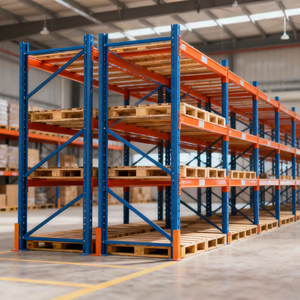
Wholesale Heavy Duty Steel Pallet Racking System Corrosion Protection CE Certified
- Load Capacity: 1,000 - 4,500 kg/level
- Steel: Q235B / Q355B Hot-Rolled Coil
- Finish: Dual Pre-treated Powder Coat
Engineered for unit-load capacities exceeding 5,000 kg per bay, cold-formed from high-yield structural steel with precision electrostatic powder coating.
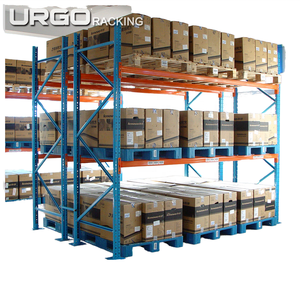
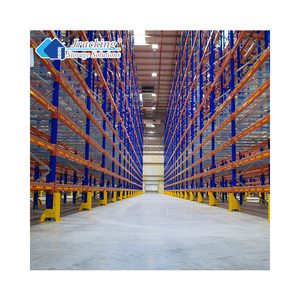
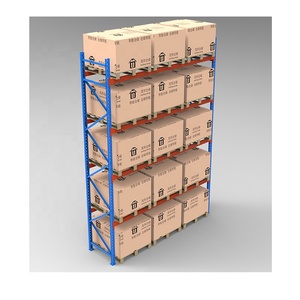
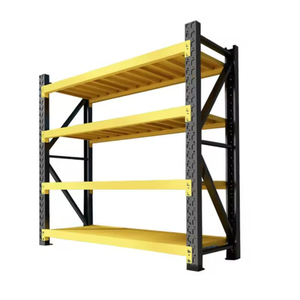
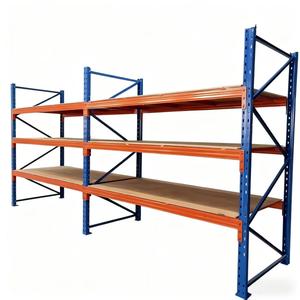
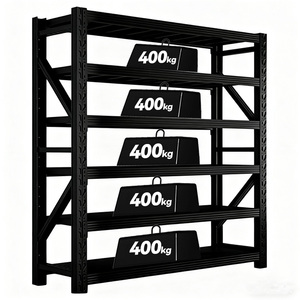
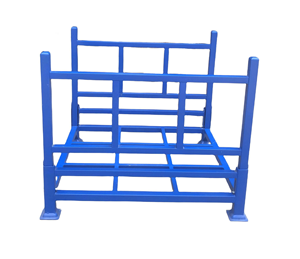
In high-density industrial warehousing, specifying pallet racking goes far beyond simple physical dimensions. Extra heavy-duty pallet racks represent critical structural assets subject to extreme static load forces, cyclic dynamic stresses from material handling equipment (MHE), and lateral seismic vectors. In modern logistics hubs operating at structural clearances of 12 to 30 meters, upright frame stability, beam connection rigidity, and baseplate anchorage engineering dictate facility safety and long-term operating viability.
Guangzhou Heda Shelves Co., Ltd. utilizes premium high-tensile, hot-rolled carbon steel coils slitted and cold roll-formed under rigorous structural deformation controls. The primary steel grades used are Q235B (yield strength $f_y \ge 235 \text{ N/mm}^2$, tensile strength $R_m = 370\text{--}500 \text{ N/mm}^2$) and structural Q355B ($f_y \ge 355 \text{ N/mm}^2$, tensile strength $R_m = 470\text{--}630 \text{ N/mm}^2$). Q355B is selected for extra heavy-duty upright frames and long-span box beams where minimizing deadweight while maximizing bending moments ($M_{Rd}$) is essential.
Cold-forming structural profiles introduces cold-work hardening, enhancing yield strength along profile corners. Our rolling lines feature up to 24 continuous forming stations that preserve the metallurgical ductility of the steel, ensuring elongation at break remains above 20%. This ductility prevents brittle shear fractures during sudden forklift impacts or cyclic load oscillations.
| Structural Parameter | Standard Duty Racking | Heavy Duty Pallet Racking | HEDA Extra Heavy Duty Systems | Design Standard Compliance |
|---|---|---|---|---|
| Primary Steel Grade | Commercial Grade Q195 / Q215 | Structural Q235B | High-Tensile Q355B (Low Alloy) | GB/T 1591, EN 10025-2 |
| Bay Load Capacity ($U_{max}$) | < 6,000 kg | 6,000 to 12,000 kg | 12,000 to 24,000+ kg | EN 15512:2020 Limit State |
| Beam Deflection Limit | $L/150$ | $L/200$ (Standard Eurocode) | $L/250$ to $L/300$ (Precision ASRS/VNA) | FEM 10.2.02, ANSI MH16.1 |
| Upright Steel Gauge | 1.5 mm - 1.8 mm | 2.0 mm - 2.5 mm | 2.75 mm - 3.5 mm Heavy Profile | EN 1993-1-3 (Cold-Formed) |
| Connector Hook Configuration | 3-Prong Friction Engagement | 3-4 Prong with Safety Lock | 5-Prong Heavy Lug with Direct Bolt Pin | RMI Specification Testing |
| Corrosion Protection | Single-Stage Direct Powder | Acid Pickling + Phosphate Dip | 10-Stage Immersion + Epoxy Polyester 80μm | ISO 12944 C3/C4 Industrial |
Under international building codes (including EN 15512 and RMI MH16.1), beam design is governed by serviceability limit states (deflection limits) rather than simple ultimate bending failure. When a pair of box beams carries two or three unit loads totaling 3,000 to 4,500 kg, total vertical sag at mid-span must strictly not exceed $\delta = L/200$ for standard counterbalanced forklift operations, and $\delta = L/300$ or stricter for Narrow Aisle (VNA) or automated shuttle interfaces. Excessive deflection causes load unsteadiness, dislodges pallet runners, and applies inward rotational moments to the upright frames, accelerating column buckling.
At our Guangzhou manufacturing complex, every heavy-duty system is validated using 3D structural Finite Element Analysis (FEA). We analyze global frame sway, rotational spring stiffness ($C_i$) of the connector-to-upright joint, and local torsional-flexural buckling of the cold-formed open Omega sections. By optimizing the pitch configuration (50mm, 75mm, and 76.2mm British Dexion pitch), we maximize moment resistance at connection nodes without sacrificing reconfigurability.
Corrosion poses a major structural risk in non-climate-controlled logistics sheds, cold storage distribution hubs, and coastal shipping zones. Standard racking manufacturers often cut costs with brief solvent wipe-downs and thin spray coatings. In contrast, HEDA Shelves enforces a comprehensive 10-stage chemical pre-treatment cycle before powder application:
The steel undergoes ultrasonic degreasing, hot alkali wash, water rinse, acid pickling to eliminate mill scale, secondary water rinse, zinc-manganese chemical phosphating (producing a 2.5 g/m² crystalline conversion layer), deionized rinse, and automated passivation dry-off. Next, computerized reciprocating spray guns apply TGIC-free thermosetting polyester powder at 60 to 90 microns Dry Film Thickness (DFT), cured in a 200°C convection oven. This finish achieves over 500 hours of continuous salt-spray resistance (ASTM B117), verified under ISO 9001:2015 audit conditions (Certificate No. 18624Q00169R0M).
How supply chain directors, industrial real estate developers, and 3PL procurement executives are optimizing heavy-duty steel rack investments.
Global logistics operators increasingly manage design approvals locally while consolidating steel procurement directly with verified Chinese source factories. This hybrid model saves 25% to 40% on total system cost while ensuring compliance with national structural codes like EN 15512, AS4084, and RMI.
Procurement teams are shifting focus from lowest purchase price to Total Cost of Ownership (TCO). Buyers evaluate raw coil grade certificates, weld test logs, and baseplate structural thickness to minimize maintenance call-outs, upright replacements, and downtime during periodic EN 15635 inspections.
With volatile maritime shipping rates, buyers favor knock-down bolted upright frames and nesting beam profiles. By optimizing packaging into 40ft High Cube containers, HEDA delivers up to 26 tonnes per container, reducing shipping costs per pallet position by 18% to 28%.
How automation, IoT monitoring, and robotics are reshaping high-load warehouse structures.
Modern heavy-duty racks increasingly serve as the structural backbone for 4-directional radio shuttles, unit-load AS/RS cranes, and Autonomous Mobile Robots (AMRs). Tighter fabrication tolerances (±1.0mm per 10m height) prevent rail misalignment and ensure smooth automated operations.
High-bay installations in seismic or high-throughput distribution centers are adopting IoT strain gauges and wireless impact monitors on critical bottom uprights. Sensors log forklift strikes, detect structural deflection shifts, and alert safety managers before progressive collapse can occur.
With global cold chains expanding to -30°C for pharmaceuticals and frozen foods, standard carbon steel risks low-temperature embrittlement. Next-generation racking uses low-temperature Charpy V-notch tested steel ($AK_v \ge 27\text{ Joules at } -20^\circ\text{C}$), preventing micro-cracks along perforated upright slots.
Operating from our modern 30,000 square meter production facility in Guangzhou, China, Guangzhou Heda Shelves Co., Ltd. (founded in 2001) brings 25 years of specialized design, engineering, and OEM/ODM manufacturing capability to industrial logistics projects worldwide.
300+ technical employees and advanced rolling mills delivering 30,000 tonnes of steel racking per month with strict delivery schedules.
CE Certificate No. 2435-CPR-8605159, ISO 9001:2015 No. 18624Q00169R0M, and RoHS testing documents verified by third-party auditors.
Complete structural calculations, floor plans, and 3D renderings prepared upfront to support local engineer reviews and municipal permit approvals.
Direct exports from Guangzhou to major international ports (Rotterdam, Hamburg, Felixstowe, Valencia, Los Angeles) with sea-safe packing.
Technical, structural, and logistics guidance for industrial warehouse planners and procurement managers.
Q235B is standard structural carbon steel with a minimum yield point of 235 MPa, ideal for ambient warehouses, standard upright profiles, and beam spans carrying loads under 3,000 kg per level. Q355B is a low-alloy, high-strength structural steel with a minimum yield strength of 355 MPa (approx. 51% higher tensile capacity). For extra heavy-duty racks, very narrow aisle (VNA) systems over 12 meters, or drive-in and radio shuttle systems carrying dense loads (4,000 to 5,000 kg per level), Q355B allows the structure to support higher dynamic moments and column axial loads without excessive profile thickness or deadweight penalties.
Our engineering department employs Limit State Design (LSD) methodologies adhering to EN 15512 (European standard for steel static storage systems) and RMI MH16.1 (US standards). We analyze beam deflection under full static payload ($L/200$ for standard operations, $L/300$ for automated handling) using certified Finite Element Analysis software. Structural load calculations incorporate safety reduction factors ($\gamma_M$), rotational stiffness testing of the end connector hooks, upright perforation reduction factors, and seismic ground acceleration spectra ($a_g$) matching your site's local geotechnical survey.
Yes. Because we design and manufacture all tooling and roll-forming profiles in-house, frame depths and clear beam lengths are tailored to your exact pallet format. For EUR/EPAL pallets (1200 x 800 mm), we typically engineer frame depths of 1,100 mm to provide a safe 50 mm front and rear overhang, with standard 2,700 mm beams accommodating three pallets per bay. For US standard GMA 48 x 40 inch pallets, we supply 42-inch or 44-inch frame depths paired with 96-inch or 108-inch clear beams, ensuring compliant clearances per OSHA and local fire codes.
Every commercial order ships with comprehensive engineering documentation: factory mill test certificates (MTC) proving steel chemical composition and yield strength, CE Declaration of Performance (Certificate No. 2435-CPR-8605159), ISO 9001:2015 quality management records, stamped CAD layout drawings, anchor bolt calculation sheets, and durable printed load notices showing safe working limits (SWL) for every bay level to support EN 15635 annual safety audits.
Standard fabrication lead time runs 15 to 25 business days depending on total project tonnage and custom RAL color requirements. For high-volume projects (over 20 ocean containers), delivery can be phased to align with warehouse floor construction. Ocean transit from Guangzhou or Shenzhen ports to major European hubs (Rotterdam, Hamburg, Valencia) takes approximately 28 to 35 days; to US West Coast ports (Los Angeles, Long Beach) takes approximately 16 to 22 days. We provide complete FOB, CIF, or DDP delivery terms directly to your site.
We use dedicated seaworthy steel bundling pallets and corrugated air-cushion separation to prevent paint abrasion during ocean transport. Upright columns are nested and banded with heavy steel strapping, while beam connector hooks are protected with thick polymer sleeves. Hardware, baseplates, shims, and row spacers are boxed in numbered, moisture-barrier wooden crates with clear packing lists to simplify on-site sorting and installation.