Export Portfolio
Industrial Heavy-Duty Storage & Material Handling Equipment
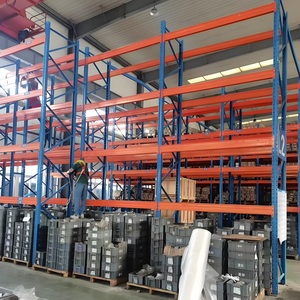
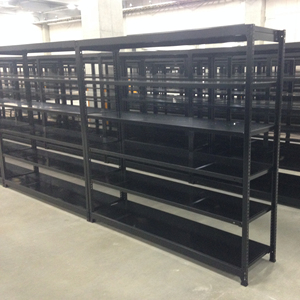
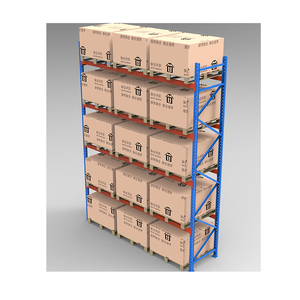
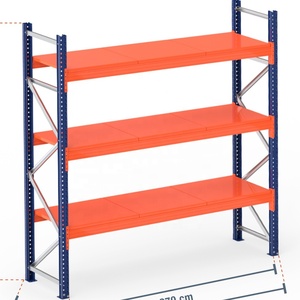
Precision-fabricated in our 30,000 m² high-capacity production facility. Built with premium structural Q235B and Q355B grade steels for long-span lumber, steel profiles, coils, and mixed industrial payloads.
2001+
Established in Guangzhou
30,000m²
Manufacturing Facility Base
30,000T/Mo
Certified Steel Throughput
120+
Countries & Ports Served
Engineering White Paper
Industrial Cantilever Storage Systems: Mechanical Design & Load Architecture
Unlike standard selective pallet racking restricted by front vertical uprights, cantilever racking is uniquely engineered to provide completely uninhibited horizontal loading clearance. This design accommodates non-standard, bulky, and continuous-length commodities such as extruded aluminium, timber bundles, steel tubing, drywall packs, and heavy motor coils.
Structural Tip: Cold-Formed vs. Hot-Rolled Structural I-Beam Columns
When procuring cantilever systems from China factories, procurement directors must differentiate between cold-formed roll-formed steel (light to medium capacity, typically 300 kg to 800 kg per arm) and hot-rolled structural H/I-beams (heavy-duty to extra heavy-duty, handling 1,000 kg up to 4,500 kg per arm). Structural steel configurations resist dynamic impact from forklifts and side-loaders significantly better, maintaining structural integrity across high-cycle timber yards and metal processing hubs.
| Cantilever Class | Structural Profile | Load Rating / Arm | Max Column Height | Arm Pitch Adjustment | Recommended Industrial Applications |
|---|---|---|---|---|---|
| Light-Duty System | Cold-rolled C/U Profile (2.0–2.5mm) | 150 – 500 kg | Up to 3,500 mm | 75 mm / 76.2 mm | PVC tubing, light molding, copper pipes, retail hardware racks |
| Medium-Duty System | Roll-formed Box / C+C Welded | 500 – 1,000 kg | Up to 6,000 mm | 100 mm / 101.6 mm | Lumber yards, furniture components, automotive exhaust pipes |
| Heavy-Duty Structural | Hot-Rolled IPE / H-Beam (Q235B) | 1,000 – 2,500 kg | Up to 10,000 mm | 100 mm / 140 mm bolted | Structural steel beams, rebar packs, sheet metal crates |
| Extra Heavy / Automated | Heavy Welded H-Beam (Q355B) | 2,500 – 5,000 kg+ | Up to 14,000 mm (AS/RS) | Custom engineered | Heavy steel coil cradles, tooling dies, multi-tier automated racking |
Tapered Arm Deflection Control
Our arms feature a 2-degree upward camber slope. Under maximum rated point or uniform loading, elastic deflection counteracts downward sagging, preventing loads from sliding forward and ensuring compliance with EN 15620 clearance margins.
- Safety stop-pins at arm tips (50–150mm)
- Prevents product slippage and forklift collision
- Available in boltless pin-lock or structural bolt type
Moment-Resisting Base Fixation
Cantilever uprights experience immense overturning moments. Our bases are constructed from high-section-modulus H-beams, welded to the column upright using robotic submerged-arc welding, secured by high-tensile anchor bolts.
- Base length always exceeds arm length
- Ground loading distributed via heavy base plates
- Custom shim sets for uneven warehouse floors
Rigid Cross-Bracing Systems
Longitudinal stability along the racking run is achieved via vertical X-bracing panels fabricated from structural angle iron and round-bar turnbuckles, ensuring strict rigidity under severe longitudinal dynamic forklift braking.
- Engineered to seismic zone parameters
- Spaced every 2 to 4 bays per FEA calculation
- High-strength 8.8 grade hardware included
Market Intelligence & Industry Trends
The Future of Industrial Cantilever Storage: 2026–2030 Roadmap
Procurement leaders are no longer sourcing static steel framing in isolation. As modern supply chains face surging land costs, skilled labour shortages, and stringent ESG decarbonisation goals, storage infrastructure is pivoting toward high-density automation and lifecycle resilience.
1. Automated AS/RS Integration for Long Loads
Traditional cantilever systems rely on multidirectional reach trucks or side-loaders with wide aisle footprints. Next-generation warehouses are implementing automated stacker crane AS/RS cantilever systems that operate in ultra-narrow aisles (UNA). Custom-designed arms equipped with optical positioning sensors, laser rangefinders, and shuttle car attachments allow heavy steel bundles to be deposited automatically with millimeter repeatability.
2. Clad-Rack Cantilever Warehouse Buildings
A major trend in European and North American industrial hubs is "rack-clad" architecture. Rather than constructing a conventional warehouse and installing racking within, the cantilever uprights themselves serve as the primary load-bearing structural columns of the building, supporting roof trusses and exterior wall cladding. This cuts construction timelines by 30% to 45% while optimizing floor-space utilization by eliminating intermediate building columns.
3. Advanced Galvanizing & Sustainable Coatings
With expanding demand for outdoor lumber and pipe storage, buyers are moving away from short-life liquid primers toward ISO 1461 compliant Hot-Dip Galvanization (HDG) with zinc coating weights exceeding 65–85 microns. For indoor facilities, low-VOC TGIC-free electrostatic polyester powder coating delivers exceptional scratch, impact, and chemical resistance without emitting hazardous air pollutants during production.
4. Finite Element Analysis (FEA) Verification
Procurement teams require verifiable digital proof before steel rolling commences. Modern suppliers must provide 3D ANSYS or SolidWorks simulation reports demonstrating von Mises stress distributions under combined dead load, asymmetric live load, seismic acceleration (acc. to Eurocode 8 or IBC), and forklift impact forces, avoiding over-engineered weight while assuring zero critical failure.
5. Hybrid Pallet-Cantilever Decking Systems
Warehouses handling mixed inventories increasingly demand hybrid convertible designs. By adding drop-in structural steel mesh decks, solid steel pans, or timber cradles across cantilever arm spans, a continuous shelf is formed that can store varied pallet sizes, irregular wooden crates, and loose conduit without requiring separate selective pallet rack rows.
6. Full Lifecycle Asset Traceability (EN 15635)
Under European storage safety standard EN 15635, logistics operators must conduct routine and annual expert racking inspections. Modern manufacturers stamp each arm, base, and column with laser-etched QR codes linking to certified mill test reports (MTR), date of extrusion, heat treatment batch, and permissible loading diagrams, simplifying compliance audits.
Enterprise Credentials & Infrastructure
Why Global Supply Chains Partner With Our Guangzhou Facility
Operating continuously since 2001, Guangzhou Heda Shelves Co., Ltd. has grown into one of China's premier industrial racking and shelving export manufacturers, bridging heavy engineering rigor with flexible factory-direct pricing.
CE & ISO 9001 Certified
Audited quality management holding CE Certificate No. 2435-CPR-8605159 and ISO 9001:2015 Registration No. 18624Q00169R0M. All steel materials comply with EN 10025 structural designations with verifiable MTR certificates.
30,000 Tonnes / Month
Our 30,000 m² state-of-the-art facility features 10 automated roll-forming lines, dual laser cutting centers, CNC multi-axis punch presses, and continuous electrostatic powder-coating lines, delivering large projects on tight timelines.
Free 3D & CAD Layouts
Our team of 300+ technical personnel and licensed structural engineers generates comprehensive DWG CAD floor plans, load calculation sheets, and 3D warehouse renderings prior to project commitment at zero engineering cost.
Global Port Logistics
Direct access to Guangzhou and Shenzhen deep-water ports. Full container load (FCL) seaworthy bundling, steel strapping, shrink-wrap protection, and DDP/CIF/FOB customs clearance handling across Europe, the Americas, and Australasia.
Complete End-to-End Production Traceability
Every cantilever upright column, structural base, and cantilever arm follows our stringent 10-step ISO 9001 certified sequence: (1) Raw Material Steel Testing → (2) Laser CNC Cutting → (3) Automated Upright Hole Punching → (4) Cold Bending → (5) High-Speed Roll Forming → (6) Deburring & Polishing → (7) Robotic Weld Assembly → (8) Multi-Stage Acid Pickling & Phosphating Pre-treatment → (9) Electrostatic TGIC-Free Powder Coating → (10) Seaworthy Packaging with Pallet-Cradle Load Blocks.
Procurement Due Diligence
Frequently Asked Questions for Cantilever Racking Importers
Essential technical, regulatory, and logistics answers compiled by our chief structural engineers for global procurement teams and logistics contractors.
What engineering information is required to calculate cantilever arm and column capacities?
To generate an accurate structural proposal compliant with EN 15512 or ANSI MH16.1, our engineering team requires:
- Load Dimensions & Characteristics: Total length, depth, height, and unit weight of your stored goods (e.g., 6,000mm steel bundle, 1,500 kg per pack).
- Number of Supporting Arms: The number of contact points required to prevent load sag (usually 2, 3, or 4 arms depending on material stiffness).
- Arm Length & Clearances: Arm length must match or slightly exceed load depth; clearances between arm tiers must account for forklift vertical lift margins (usually 100–150 mm).
- Facility Clear Height & Floor Slab Capacity: Concrete floor slab thickness (minimum 150–200 mm reinforced concrete recommended) and soil compressive rating.
- Forklift Specifications: Maximum reach height, mast collapsed height, truck turning radius, and guide rail requirements.
How do single-sided and double-sided cantilever systems differ structurally?
Single-Sided Racks: Feature arms extending from one side of the column, typically positioned against warehouse walls. The base on that side carries the full overturning moment. For safety, single-sided racks should never be loaded without anchor bolt verification.
Double-Sided Racks: Feature arms extending from both the front and rear of the central column. Structurally, when loaded evenly on both sides, the moments cancel each other out, making double-sided systems inherently more stable. However, engineering calculations always design for the worst-case scenario: a fully loaded front side with an entirely empty rear side (asymmetric dynamic load condition).
Double-Sided Racks: Feature arms extending from both the front and rear of the central column. Structurally, when loaded evenly on both sides, the moments cancel each other out, making double-sided systems inherently more stable. However, engineering calculations always design for the worst-case scenario: a fully loaded front side with an entirely empty rear side (asymmetric dynamic load condition).
Which steel standards and mill certificates are supplied with export shipments?
All our structural cantilever racks are fabricated from certified prime grade Chinese standard Q235B (yield strength ≥ 235 MPa, comparable to European S235JR and ASTM A36) or high-strength Q355B (yield strength ≥ 355 MPa, comparable to S355JR and ASTM A572 Grade 50). Every production batch is delivered with EN 10204 Type 3.1 Mill Test Reports (MTR) detailing chemical analysis (carbon, manganese, phosphorus, sulfur) and mechanical tensile, yield, and Charpy impact tests.
What surface treatment is best suited for outdoor yard storage?
For unroofed lumber yards, pipe distribution centers, and marine environments, Hot-Dip Galvanizing (HDG) according to ISO 1461 is strongly recommended. The steel is submerged into molten zinc at approximately 450°C, creating a metallurgical zinc-iron alloy bond that provides sacrificial cathodic protection against rust, even if scratched by forklift forks. Standard powder-coated racks are strictly intended for indoor, climate-controlled, or covered canopies.
Can HEDA Shelves manufacture private label OEM/ODM cantilever systems for foreign distributors?
Yes. Over 40% of our export output is produced under OEM/ODM partnerships for leading racking distributors, material handling integrators, and industrial shelving brands across Germany, the UK, the Netherlands, Australia, and the United States. We support custom RAL powder coat colors, bespoke column punch patterns (75mm, 76.2mm / 3-inch, 100mm pitches), client-branded load rating plates, and distributor-specific export packing specifications.
What are typical production lead times and ocean transit durations?
Factory production for standard containerized orders (1 to 5 x 40HQ containers) is completed in 15 to 25 business days. Custom hot-rolled structural or hot-dip galvanized projects require 25 to 35 business days. Direct ocean transit from Guangzhou / Shenzhen to main European base ports (Rotterdam, Hamburg, Antwerp, Valencia) ranges between 28 and 35 days; to US West Coast ports (Long Beach, Oakland) approximately 14 to 18 days; and to Australian ports (Sydney, Melbourne) 12 to 16 days.
Ready to Engineer Your Facility's Heavy Cantilever Storage System?
Submit your building CAD drawings, product dimensions, and load targets. Our senior racking structural team will furnish a turnkey engineered design, deflection analysis, and factory-direct quotation within 24 hours.
Get a Quote