Precision Heavy-Duty Racking & High-Density Track Systems
Direct factory manufacturing certified to international structural parameters. Compare structural configurations designed to handle extreme payload limits, optimize narrow-aisle clearances, and eliminate wasted aisle footprints.
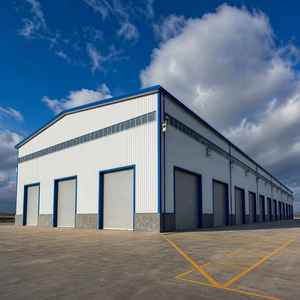
Reach Truck Narrow Racking Galvanized Frame System
- High-bay density up to 14 meters
- Galvanized uprights for high durability
- Reduced aisle width footprint down to 1.6m
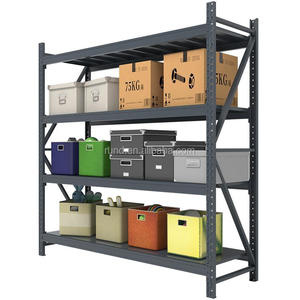
Medium Duty Metal Storage Rack Floor Type Fall-Free
- Boltless snap-in node assembly
- Fall-free safety rail engineering
- Supplied with free custom 3D/CAD layout
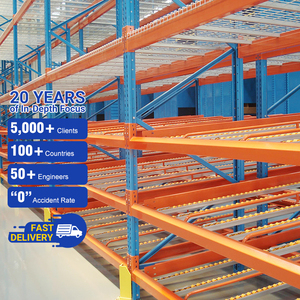
Heavy Duty Gravity Flow Sliding Roller Racking
- Automatic FIFO stock replenishment
- Integrated centrifugal speed controllers
- Galvanized steel roller bed durability
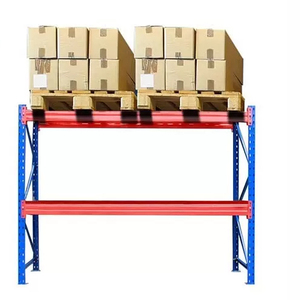
Heavy Duty Industrial Selective Pallet Racking
- 100% immediate pallet selectivity
- 50mm/75mm adjustable pitch levels
- Standard European pallet compliance
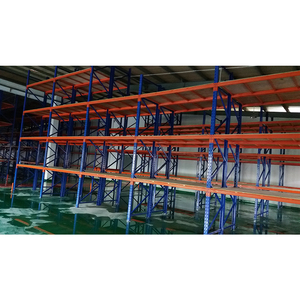
Complete Turnkey Warehouse Pallet Racking & Mezzanine
- Multi-tier rack-supported floors
- Doubles picking floor space directly
- Integrated safety gates and stairs
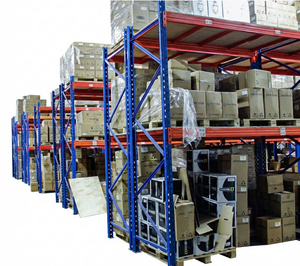
3-Layer Cold Rolled Steel Heavy Duty Storage Racks
- High-yield cold rolled steel construction
- Epoxy electrostatic powder coat finish
- Modular expansion for fast-growing 3PLs
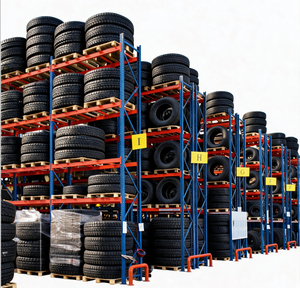
Custom Industrial Pallet Shelving Q235 Steel Beam
- Q235B structural grade steel profiles
- Load ratings up to 4,500 kg per beam tier
- Automated continuous weld joints
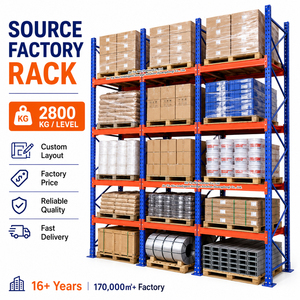
2800KG 5 Levels High Bay Industrial Warehouse Rack
- Rated 2800 kg per level tested payload
- 5-tier high vertical clearance utilisation
- Reinforced baseplates for tracked mobility
The Anatomy of Pallet Racks On Tracks: Converting Fixed Footprints into High-Density Mobility
In modern industrial intralogistics, commercial real estate costs and temperature-controlled storage overhead represent substantial operational line items. Fixed selective racking configurations demand dedicated aisles that consume 55% to 65% of net warehouse floor space. Pallet racks on tracks (commonly known as Powered Mobile Racking Systems or Rail-Guided Mobile Bases) resolve this spatial inefficiency by mounting heavy-duty racking superstructures onto motorized electro-mechanical wheel carriages running along precision-embedded floor rails.
By collapsing static aisles into a single, on-demand operational aisle opened via radio-frequency (RF) remote control, optical optical sensors, or Warehouse Management System (WMS) triggers, mobile track racking achieves an instant 80% to 100% capacity increase over identical physical envelopes. This structural approach preserves 100% direct pallet selectivity without sacrificing access speed.
Kinematic Carriages and Embedment Engineering
The integrity of a mobile racking installation depends not merely on the upright cold-formed profiles, but fundamentally on the interface between the guide rails, the sub-floor slab, and the drive wheels. Floor guide rails are leveled with millimetric accuracy using high-early-strength epoxy grouts prior to final slab casting or post-milled into existing industrial concrete floors using precision laser-guided trench cutters. These heavy-duty steel rails handle point loads exceeding 15 to 25 metric tons per bogie, transferring lateral seismic and dynamic brake decelerations directly into structural foundation beams.
Modern tracked bases feature dual-flanged forged steel wheels running on hardened flat rails, paired with plain cylindrical wheels on reaction guide tracks to prevent structural binding along long carriage spans (which can reach over 90 continuous meters). Integrated variable frequency drives (VFD) ensure progressive acceleration and deceleration curves, preventing pallet tipping or kinetic shifting of high-stacked SKUs during simultaneous carriage transit.
Future Sourcing Trends for Mobile Pallet Racking Systems
How supply chain executives, warehouse developers, and cold-chain operators are shifting procurement criteria to navigate ESG mandates, automated material handling integration, and lifetime total cost of ownership (TCO).
1. Cold Storage Decarbonisation & Density Maximisation
With industrial electricity tariffs climbing globally, refrigeration energy represents up to 70% of refrigerated distribution center (PDC) costs. Mobile racking on tracks compresses cold-storage building volumes by up to 45%, significantly decreasing thermal leakage envelopes and HVAC tonnage requirements.
- Operating efficiency down to -30°C freezer zones
- Low-temperature synthetic lubricants & heaters
- 35% average reduction in refrigeration kWh per pallet
2. AGV, AMR & Robotic Handling Synergies
Tracked mobile racks are transitioning from manual push-button stations to automated interfaces communicating directly via Industrial IoT, OPC-UA protocols, and central WMS platforms. Automated Guided Vehicles (AGVs) trigger aisle opening routines along travel pathways before reaching rack corridors.
- Automated light-curtain cross-aisle protection
- Zero-latency optical distance encoders
- Autonomous replenishment and pick operations
3. Structural Redundancy & Rigorous European Norms
Global buyers prioritize manufacturers capable of validating structural calculations against rigorous engineering standards such as EN 15512 (Steel static storage systems), EN 15620 (Tolerances, deformations and clearances), and CE marking under the Construction Products Regulation (CPR 305/2011).
- Verified certified tensile Q235B / Q355B coils
- Independent third-party load test documentation
- Seismic and dynamic carriage stability simulations
Pallet Racks On Tracks vs. Alternative Storage Typologies
Data-driven trade-off analysis between mobile track racking, static selective systems, drive-in systems, and radio shuttle lanes.
| Storage Racking System | Footprint Efficiency | Pallet Selectivity | Civil Floor Rail Works | Cold Store Cost Benefit | Safety Infrastructure |
|---|---|---|---|---|---|
| Powered Pallet Racks on Tracks | 85% – 90% Ultra High | 100% Direct Access | Embedded precision rails required | Maximum (35–45% ROI) | Optical safety curtains + Bump sensors |
| Standard Selective Racking | 35% – 45% Low | 100% Direct Access | None (Direct slab anchor) | Low (High air volume waste) | Upright column guards |
| Drive-In Pallet Racks | 70% – 80% High | Poor (LIFO only) | Floor guide channels optional | Moderate (High risk of rack damage) | Internal drive buffers |
| Radio Shuttle Cart System | 80% – 85% Very High | Moderate (Lane-dependent) | None (Track inside beam profile) | High (Dedicated channels) | Internal shuttle end-stops |
Technological Evolution of Mobile Racking: From Mechanical Relays to Smart Industrial Mesh
The earliest mobile racking systems depended on mechanical relay switches, slip rings, and pneumatic contact bumpers that required frequent mechanical calibration. Today's fourth-generation pallet racks on tracks incorporate Industrial Ethernet, decentralised inverter motor controls, and fail-safe safety PLCs (SIL3 / PLd).
Key Architectural Advancements:
1. Decentralised Brushless Direct Drives: Instead of long central transmission drive-shafts that induce mechanical twist over 50-meter bases, modern carriages utilise synchronized individual drive motors at each wheel assembly. Synchronisation is controlled electronically via high-speed fieldbus architectures (such as PROFINET or EtherCAT), eliminating rail jamming and premature flange wear.
2. Optical Multi-Layer Safety Fields: Modern EN ISO 13849-1 standards require multi-tier safety protections. Mobile carriages are outfitted with dual-zone safety laser scanners positioned at floor level (to halt carriage movement if personnel or discarded timber debris enter the transit path) and at elevated heights to verify rack clearance before operational consolidation.
3. Night Parking & Energy Saver Modes: Configurable control systems program the entire mobile array to open equidistant ventilation gaps throughout the installation during off-peak night cycles. In cold-chain environments, this prevents localized humidity pockets, ensures uniform temperature distribution across all pallets, and avoids freezing the carriage motor gearboxes.
Factory-Direct Structural Manufacturing Protocol
Every structural column, load-bearing connector, and motorized wheel carriage undergoes strict traceability inspection at our 30,000 m² Guangzhou production facility.
Steel Metallurgy QA
Certified mill tests for yield strength, elongation, and chemical alloy composition on certified structural coils.
CNC Roll Forming
Continuous multi-station cold rolling guaranteeing millimeter upright profiles up to 14 meters without torsion.
Automated Welding
Robotic gas-shielded CO2 beam connector welding for uniform penetration and cyclic fatigue resistance.
Surface Pretreatment
9-stage acid pickling, rust removal, and zinc phosphating prior to epoxy electrostatic powder coating.
Pre-Assembly & Run
Modular test staging of drive bogies, laser aligners, and electrical control panels before export packing.
Your Trusted Engineering & Manufacturing Partner Since 2001
With 25 years of specialized storage manufacturing experience, Guangzhou Heda Shelves Co., Ltd. has grown to operate a modern 30,000 square meter factory complex backed by more than 300 experienced technical, structural, and logistics specialists. Supplying high-performance pallet racking to over 120 countries, our factory produces up to 30,000 tons of industrial storage components monthly.
We work directly with warehouse developers, 3PL logistics corporations, and industrial distributors. By eliminating intermediate broker markups, we deliver factory-direct engineering, full custom CAD/3D project modeling, and seamless sea freight logistics directly to European, North American, and global deepwater ports.
Verified Quality Accreditations
Frequently Asked Questions on Pallet Racks On Tracks
Direct technical answers addressing floor slab engineering, safety standards, power consumption, installation lead times, and customization options.
What structural slab specifications are required for installing pallet racks on tracks? +
How does a mobile racking system maintain operator safety in active warehouse corridors? +
Can the racking system accommodate European pallets (EUR 1200 x 800 mm) and US industrial pallets (48 x 40 in)? +
What are typical manufacturing lead times and ocean shipping durations to major international ports? +
How much electrical power does an automated or semi-automated mobile racking block consume? +
What documentation and certifications are provided for local municipal and building code sign-offs? +
How does HEDA Shelves support on-site installation and mechanical rail alignment abroad? +
Transform Your Warehouse Density with Engineered Mobile Track Racking
Submit your warehouse AutoCAD floor plan, ceiling clear heights, and pallet specifications. Our senior structural engineers will return a complete 2D/3D layout, load-capacity matrix, and formal factory-direct quotation within 24 business hours.