Engineering Whitepaper & Global Sourcing Guide

Top 10 Industrial Warehouse Shelving Factory & Supplier

Technical specifications, seismic design criteria, automation dynamics, and international procurement standards.

Executive Industrial Report

State of Global Industrial Warehouse Shelving & Racking

Industrial supply chains in 2026 demand structural precision, high volumetric efficiency, and structural safety compliant with European EN 15512, EN 15620, and American RMI MH16.1 standards. This technical engineering paper assesses tier-1 manufacturing practices, load dynamics, factory direct capacities, and full turnkey logistics.

25+
Years of Manufacturing
30,000t
Monthly Steel Output
10,000+
Global Storage Projects
120+
Export Jurisdictions
Engineered Storage Portfolio

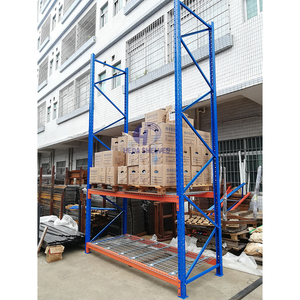
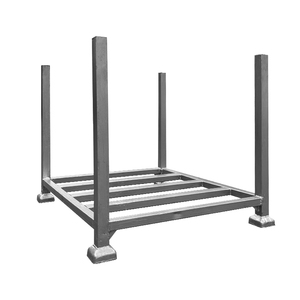
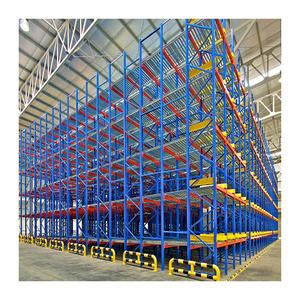
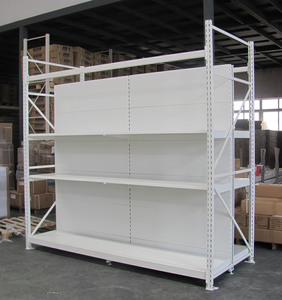
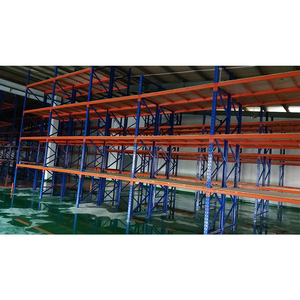
Structural Warehouse Shelving & Racking Systems

Tested cold-formed steel solutions optimized for high dead-load safety margins, rapid SKU access, and modular expansion across multi-tier distributions.

Data & Structural Architecture

Industrial Shelving & Racking Comparative Engineering Matrix

Direct comparative parameters utilized by structural storage engineers to select systems based on building floor loads, forklift kinematic radii, and SKU turnover cycles.

Storage Topology Aisle Clear Width Volumetric Efficiency Direct Selectivity Standard Safe Working Load Target Handling Fleet
Selective Pallet Racking 3,000 – 3,500 mm 40% – 50% 100% (Instant) 1,000 – 4,500 kg / level Standard Counterbalance, Reach Trucks
Very Narrow Aisle (VNA) 1,600 – 1,900 mm 65% – 75% 100% (Instant) 1,000 – 3,000 kg / level Wire/Rail Guided Turret Trucks
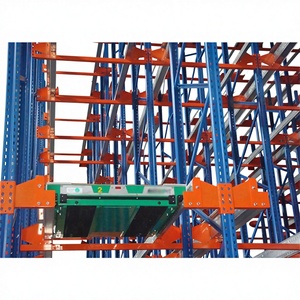
Radio Shuttle Deep-Lane Lane depth to 40m 80% – 90% Lane-Dependent 500 – 2,000 kg / pallet Counterbalance + Autonomous Shuttle
Drive-In / Drive-Through Forklift entering width 65% – 80% Low (LIFO / Strict Lane) 1,000 – 1,500 kg / pallet Standard Lift Trucks with overhead guard
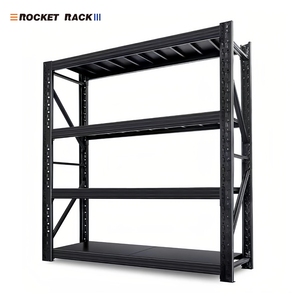
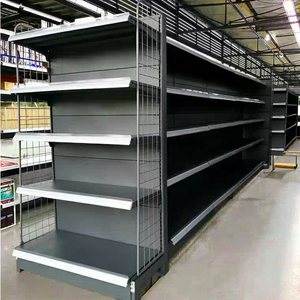
Industrial Longspan Shelving 900 – 1,200 mm Variable / Multi-tier 100% Manual Access 200 – 800 kg / shelf Manual Cart, Order Picker, Conveyor
Rack-Supported Mezzanine Grid customized 180% – 250% (Floor Area) Zoned High-Density 300 – 1,000 kg / m² deck AMR Systems, Goods Lifts, Manual Carts
Strategic Sourcing Intelligence

Future Procurement Trends in Industrial Warehouse Storage

Procurement teams are shifting away from standalone spot buying to lifecycle-engineered, modular, and supply-chain audited manufacturing contracts.

1. Structural Decarbonization & Green Steel

Supply chain audits under European CBAM (Carbon Border Adjustment Mechanism) now evaluate the carbon intensity of structural steel. Modern procurement prefers mills utilizing scrap-based EAF (Electric Arc Furnaces) and high-solids eco-friendly powder coatings free of heavy metal volatilization.

2. Turnkey BIM & Digital Twin Compliance

Buyers demand IFC-compatible BIM (Building Information Modeling) objects prior to fabrication. Incorporating precise structural steel load-bearing profiles into warehouse digital twins eliminates MEP clash detections, sprinkler pipe interferences, and dynamic robotic routing hazards before container shipment.

3. Seismic Engineering & Cold-Formed Ductility

Seismic testing under EN 16681 and AS 4084 regulations requires precise ductile behavior at beam-to-column connector nodes. Global suppliers must deliver calibrated mechanical strain-displacement data rather than standard generic structural static calculations.

Structural Technology Advances

Technological Development Trends in Modern Storage

Industrial warehousing is experiencing radical shifts toward hybrid automation, hyper-accurate cold-roll forming, and active structural safety surveillance.

Automation-Ready Rack Geometry

With the integration of Autonomous Mobile Robots (AMRs) and high-speed automated storage and retrieval systems (ASRS), rack tolerance demands have narrowed from millimeters to sub-millimeter scales. Upright verticality, rail deflection limits under dynamic acceleration, and beam camber must maintain ±1.0mm tolerance across a 30-meter high-bay structure.

High-Yield Micro-Alloyed Steels

Transitioning from standard Q235B steel to higher-yield micro-alloyed cold-formed variants (such as Q355B and high-strength European S355MC/S420MC) permits thinner profiles with higher cross-sectional second moments of area. This reduces tare deadweight on foundation slabs while significantly improving critical buckling limits under seismic accelerations.

Sensorized Health Monitoring

Smart industrial racking systems now incorporate triaxial MEMS impact accelerometers directly on column baseplates. Connected via Industrial IoT protocols, these sensors flag upright impacts exceeding safe design thresholds in real time, streamlining periodic compliance under EN 15635 warehouse safety audit regulations.

Enterprise Manufacturing Competence

Factory-Direct Engineering: Guangzhou Heda Shelves Co., Ltd.

Operating since 2001, Guangzhou Heda Shelves Co., Ltd. controls a certified 30,000 m² heavy-machinery production campus, translating advanced roll-forming capabilities into structurally validated global warehouse racking.

Certified Global Quality Infrastructure

Heda maintains full accreditation under ISO 9001:2015 (Certificate No. 18624Q00169R0M) and structural CE Certification (Certificate No. 2435-CPR-8605159). Frame designs, cold-formed connectors, and upright profiles are manufactured using documented chemical-composition checked steel coils, backed by verified mechanical mill certificates and RoHS compliance tests.

In-House Turnkey Layout Engineering

With an in-house team of more than 300 technical and production personnel, Heda does not outsource engineering. Every layout begins with rigorous DWG CAD structural assessments, determining slab point loads, pallet clearances according to Euro EPAL and US GMA standards, and customized RAL electrostatic powder coating for optimal corrosion life.

Verified 10-Step Quality Production Standard

01

Raw Material QA

Certified Q235B/Q355B tensile & metallurgical coil verification.

02

Precision CNC Slitting

Automated high-speed precision longitudinal strip cutting.

03

Automated Punching

Continuous 50mm pitch high-speed CNC column punching.

04

Cold Roll Forming

Multi-pass dedicated roll stations shaping open/closed box beams.

05

Precision Cut-Off

Flying saw CNC cut-off maintaining tight longitudinal tolerances.

06

Robotic Welding

Shielded automated welding of 3-to-5 claw beam connectors.

07

Pickling & Phosphating

Multi-stage acid bath degreasing and rust-inhibiting conversion layer.

08

Powder Coating & Cure

Automated electrostatic thermoset powder cured at 180°C–200°C.

09

Structural Batch Testing

Deflection testing under 1.5x design capacity test loads.

10

Export Packaging

Steel banded, bubble-cushioned seaworthy container stowing.

Plan Your Warehouse Storage Layout Direct With Factory Engineers

Eliminate distributor markups and communication gaps. Send your DWG/PDF architectural plan to obtain an engineered bay-by-bay calculation, loading capacity sheet, and comprehensive quote directly from our Guangzhou manufacturing facility.

Procurement Due Diligence

Frequently Asked Questions for Warehouse Shelving Procurement

Engineered responses addressing technical compliance, load testing methodologies, seismic considerations, and customs logistics.

What structural design codes govern industrial racking projects in Europe and North America?

In Europe, pallet racking structures are calculated according to EN 15512 (Principles for structural design), EN 15620 (Tolerances, deformations and clearances), and EN 16681 (Seismic design). In North America, the governing standard is ANSI/RMI MH16.1 (Specification for the Design, Testing and Utilization of Industrial Steel Storage Racks). Heda Shelves manufactures and inspects racking to these global structural standards, supplying project-specific load application notices and structural calculation sheets for municipal approvals.

How does beam deflection affect safety and forklift operations?

Under standard international design principles, the maximum allowable vertical deflection for pallet rack beams under normal working load is limited to L/200 (where L is the clear span distance between uprights). For automated system applications or narrow-aisle turret truck interfaces, tighter limits such as L/300 or L/400 are enforced to prevent load dislodgement and to maintain proper operational sensor sightlines on automated shuttle equipment.

What is the difference between Q235B and Q355B cold-rolled steel in shelving manufacturing?

Q235B offers a yield strength of 235 MPa, making it cost-efficient and ductile for standard light-to-medium industrial shelving and selective racking systems. Q355B provides a minimum yield strength of 355 MPa (roughly equivalent to European S355 / ASTM A572 Grade 50). Using Q355B allows our engineers to design thinner-gauge upright columns with higher load resistance, optimizing shipping container weight while achieving higher load ratings for high-bay and seismic applications.

Can warehouse shelving systems be configured for both Euro (EPAL) and US (GMA) pallets simultaneously?

Yes. Euro pallets measure 1,200 mm × 800 mm, whereas standard US GMA pallets measure 48" × 40" (1,219 mm × 1,016 mm). For mixed-inventory logistics centers, frame depths are typically engineered at 1,000 mm or 1,100 mm with drop-in cross supports, safety pallet support bars, or heavy-duty wire mesh decking. This ensures that either pallet profile sits centered with the required 50 mm minimum overhang over front and rear load beams.

What lead times and logistics arrangements are required for international containerized orders?

Production cycles generally require 15 to 30 days depending on total project tonnage and paint customization (custom RAL codes). Ocean transit from Guangzhou/Shenzhen ports to main European hubs (Rotterdam, Hamburg, Antwerp) averages 30–38 days; transit to North American West Coast ports averages 14–20 days, and East Coast ports approximately 28–35 days. Shipments are handled under FOB, CIF, or DDP terms with component-numbered assembly packs.

What documentation is provided to support periodic safety inspections under EN 15635?

Heda provides comprehensive bilingual assembly manuals, structural connection detail drawings, certified beam loading charts, maximum permitted frame loads based on unbraced clear vertical heights, and high-visibility aluminum/PVC load warning notices. These plates specify maximum uniformly distributed loads (UDL) per pair of beams and per bay, satisfying external annual warehouse health and safety audit criteria.

Direct Engineering Consultation

Request an Engineered Storage Plan & Quotation

Provide your facility dimensions, clear building eaves height, material handling equipment turning radius, and load weights. Our project engineering desk will calculate and generate an optimized 2D/3D CAD layout within 24 hours.

Contact Us